2026: The Year We Stop Chasing AI Hype and Start Building Real Value

2026: The Year We Stop Chasing AI Hype and Start Building Real Value
Welcome to January 2026. If the last two years were defined by the breathless pursuit of the "next big model," 2026 is the year of the Architect. We are no longer impressed by an AI that can simply chat; we are looking for AI that can solve fires—literally and figuratively—without breaking the bank.
 Illustration
Source: Dev.to AI
Illustration
Source: Dev.to AI
In this post, I want to break down three major shifts occurring right now in the AI ecosystem and what they mean for your business and your career as a tech professional.
1. The Death of Over-Spec’d Hardware: The Clawdbot Lesson
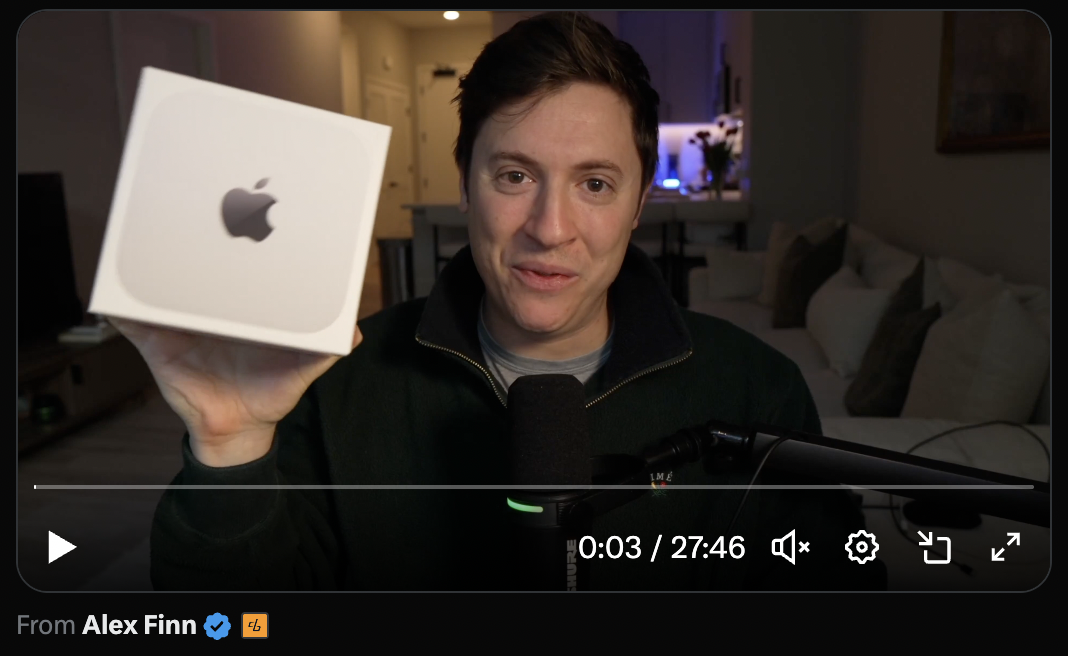
Recently, the tech community has been obsessed with "Clawdbot," a powerful AI assistant that has many users rushing to buy $600+ Mac Minis just to host it locally. But here is the reality of 2026: The cost of intelligence is plummeting.
As recently highlighted in the developer community, you don't need a dedicated, high-end machine to run sophisticated automation. We are seeing a massive shift toward "lite" deployments. For as little as $3 to $5 a month, businesses can now run specialized agents on infrastructure they already own or via ultra-affordable cloud VPS instances.
Business Insight: If you are a business owner, stop budgeting for massive hardware overhead. The goal in 2026 is Efficiency-as-a-Service. Why spend $600 on a single node when you can distribute that intelligence across your existing network for a fraction of the cost? Local execution is great for privacy, but over-provisioning is the enemy of ROI.
2. From "Muscle" to "Mind": AI in High-Stakes Industry
One of the most compelling stories of 2026 comes from the industrial sector. We’re seeing a transition from hardware-focused solutions to data-driven intelligence. Take the latest developments in firefighting technology, for example. For decades, innovation was about the nozzle—the "muscle" on the ground. Today, the real value lies in the AI that predicts fire behavior and optimizes resource allocation.
This is what I call the "AI Gold Mine." It’s not about the physical tool; it’s about the layer of intelligence that sits on top of it.
Actionable Takeaway: Look at your business’s "muscle"—your core operations or physical products. Ask yourself: Where is the data gold mine? In 2026, the profit isn't in the task itself, but in the AI’s ability to refine, predict, and automate the decision-making process behind that task.
3. The Developer’s New Identity: Moving Beyond the Syntax
There’s an undeniable tension in the developer community this year. As AI models become increasingly proficient at writing code and designing architectures, many developers are asking: "What is my role?"
We must move past the idea that AI is "magic." When you look closer, AI is a tool of logic. The developers who are thriving in 2026 are those who have stopped being "coders" and have started being "Systems Reasoners."
In 2026, your value isn't in knowing the syntax of a language—it’s in knowing how to orchestrate a solution. AI can write the functions, but it cannot yet fully understand the nuance of human business needs or the long-term ethical implications of a system's architecture.
Practical Steps for 2026
To stay ahead this year, I recommend the following:
- Audit Your Tech Stack for Over-Provisioning: Stop buying hardware you don't need. Use lightweight frameworks to run your AI agents.
- Focus on Data Capture: If you aren't collecting data from your core business processes yet, you are missing out on the "Gold Mine" Sunny Sethi and other visionaries are currently tapping into.
- Upskill in AI Orchestration: Don't just learn to prompt; learn to build pipelines. The future belongs to those who can connect Clawdbot-style agents to real-world industrial data.
Conclusion
2026 is not about the magic of AI—it's about the mastery of it. Whether you are running a small agency or a large industrial firm, the goal is the same: use the smartest, most cost-effective tools to solve the most complex problems.
Are you still chasing the hype, or are you building the architecture of the future?
Related Videos
The 6 Most Profitable AI Businesses to Start in 2026
Channel: Dan Martell
The 2026 AI Hardware Revolution: iPhone 17, Android XR & NVIDIA Rubin
Channel: Winning News