Architecting Agentic Ecosystems: A 2026 Guide to MCP, Observability, and Scalable Backends

By Abo-Elmakarem Shohoud | Ailigent
Introduction: The Era of Agentic Autonomy
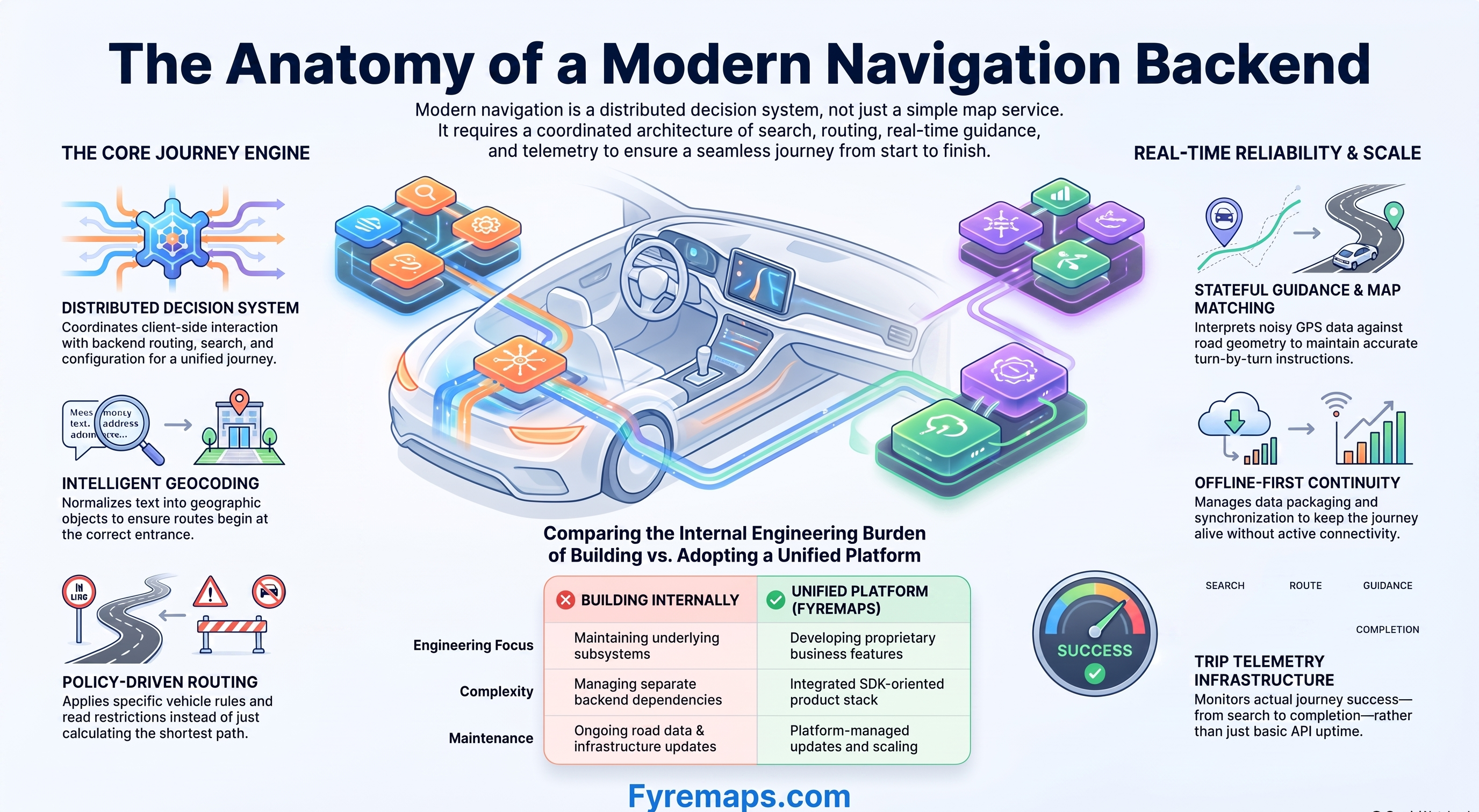 The Backend Architecture of Modern Navigation Apps
Source: Dev.to AI
The Backend Architecture of Modern Navigation Apps
Source: Dev.to AI
As we navigate the technological landscape of September 2026, the conversation has shifted from simple large language models (LLMs) to fully autonomous agentic systems. In 2026, we no longer just 'chat' with AI; we deploy agents that manage our WordPress sites, refactor our codebases, and coordinate complex logistics. However, building these systems requires more than a prompt—it requires a robust backend architecture, seamless data protocols, and deep observability.
This tutorial aims to bridge the gap between high-level AI concepts and practical implementation. We will explore how to architect backends that mirror the complexity of modern navigation apps, implement the Model Context Protocol (MCP) to give agents a 'window' into our data, and use OpenTelemetry to ensure we aren't flying blind.
Learning Objectives
- Understand the multi-layered backend architecture required for real-time agentic systems.
- Learn to implement Model Context Protocol (MCP) to connect AI agents to CMS platforms like WordPress.
- Master the use of OpenTelemetry to monitor agentic decision-making processes.
- Build a mental model for 'Agent-First' infrastructure design.
Section 1: The Anatomy of a Modern Agentic Backend
To understand how an AI agent functions, we must first look at how modern navigation apps operate. A navigation app is not just a map; it is a coordination engine. It handles geocoding, routing, telemetry, and offline continuity simultaneously.
Agentic AI is a paradigm where AI systems do not just generate text but autonomously plan and execute multi-step workflows by interacting with external tools and databases. Just as a navigation app must process GPS signals and traffic data in real-time, an AI agent in 2026 must process live context from various APIs.
The Navigation Analogy for AI
When you build an agentic system, your backend must support:
- State Management: Tracking where the agent is in a multi-step task.
- Telemetry: Continuous feedback loops (e.g., did the code change break the build?).
- Security & Sandboxing: Ensuring the agent doesn't execute malicious commands.
At Ailigent, we emphasize that the success of an agent depends 20% on the model and 80% on the infrastructure supporting it. In 2026, the standard for this infrastructure is a distributed microservices approach that prioritizes low-latency data retrieval.
Section 2: Implementing MCP (Model Context Protocol)
One of the biggest hurdles in 2026 is the 'Visibility Gap'—the difference between what a developer sees in a database and what an AI agent perceives. This is where the Model Context Protocol (MCP) comes in.
Model Context Protocol (MCP) is a standardized communication layer that allows AI models to query and interact with application data structures in a machine-readable format. For instance, in WordPress, plugins like Albert or Novamira use MCP to let agents 'see' posts, taxonomies, and user permissions as structured data rather than raw HTML.
Tutorial Step: Connecting an Agent to WordPress via MCP
To give an agent like Claude or GPT-5 access to your site, follow these steps:
- Install an MCP-Enabled Plugin: In your WordPress dashboard, install a plugin that exposes the REST API to MCP clients.
- Define the Schema: Ensure your data is mapped. An agent doesn't see a 'button'; it sees an
action_hookwith specific parameters. - Test the Perspective: Use a tool like the MCP Inspector to see exactly what the agent sees.
 WordPress MCP: What an AI Agent Actually Sees
Source: Dev.to AI
WordPress MCP: What an AI Agent Actually Sees
Source: Dev.to AI
Example JSON-RPC call via MCP:
{
  "method": "get_site_context",
  "params": {
    "include_plugins": true,
    "active_theme": "Ailigent-Core-2026"
  },
  "id": 1
}
By using MCP, you eliminate the hallucination risks associated with agents trying to 'guess' how your site is structured.
Section 3: Observability with OpenTelemetry
As agents become more autonomous, 'Observability' becomes the developer's best friend. You cannot debug an agentic system using traditional logs alone. You need to see the 'thought trace.'
OpenTelemetry is an open-source observability framework providing a standardized way to collect, process, and export telemetry data (traces, metrics, and logs) from cloud-native software. In the context of agentic coding tools like Claude Code or Cursor, OpenTelemetry allows us to track every API call the agent makes and why.
Comparative Analysis: Traditional vs. Agentic Monitoring
| Feature | Traditional Monitoring | Agentic Observability (2026) |
|---|---|---|
| Primary Metric | Uptime / Latency | Reasoning Accuracy / Token Efficiency |
| Data Type | Server Logs | Trace Spans of 'Thought Loops' |
| Debugging Tool | Stack Trace | OpenTelemetry Spans + MCP Logs |
| Goal | Fix Crashes | Correct Logic Deviations |
Step-by-Step: Adding Observability to an Agentic Workflow
- Instrument the Agent Client: Use the OpenTelemetry SDK to wrap your agent's execution function.
- Export to a Visualizer: Send your data to a platform like Honeycomb or Jaeger.
- Analyze the Spans: Look for spans where the agent 'loops'—this usually indicates a lack of context or a bug in the MCP layer.
# Example: Python Instrumentation for an Agent Task
from opentelemetry import trace

tracer = trace.get_tracer(__name__)

with tracer.start_as_current_span("agent_task_execution") as span:
    span.set_attribute("agent.goal", "Optimize WordPress Database")
    # Agent logic here
    result = agent.run()
    span.set_attribute("agent.result", "Success")
Section 4: Practical Exercise - Try It Yourself
The Challenge: Set up a local WordPress instance and use an MCP client to ask an AI agent to "List all plugins and identify which ones have pending updates."
- Task 1: Inspect the raw MCP output. Does the agent see the version numbers correctly?
- Task 2: Use OpenTelemetry to measure how many tokens were used for this single query.
- Reflection: How would this process differ if the agent had to 'scrape' the UI instead of using MCP? (Hint: The token cost would be 10x higher).
Key Takeaways
- Infrastructure is King: In 2026, the backend architecture of your AI application must be as robust as a global navigation system, handling real-time telemetry and state.
- Standardize with MCP: Stop letting agents guess your data structure. Use Model Context Protocol to provide a clear, machine-readable map of your application.
- Observe the 'Why': Use OpenTelemetry to move beyond simple logging. Understanding the 'reasoning spans' of an agent is the only way to debug autonomous systems effectively.
- Ailigent's Pro-Tip: Always sandbox your agents. No matter how good your observability is, an agent should never have direct write access to a production database without a human-in-the-loop (HITL) check.
Next Steps for Further Learning
- Explore the GitHub MCP SDK to build your own custom data connectors.
- Read the OpenTelemetry 2026 Specification for semantic conventions in AI tracing.
- Contact Abo-Elmakarem Shohoud at Ailigent for a deep dive into enterprise-grade agentic transformations.
Bottom Line
The transition from 'AI as a tool' to 'AI as a teammate' requires a fundamental shift in how we build backends. By combining the architectural rigor of navigation apps with the transparency of MCP and the oversight of OpenTelemetry, you can build agentic systems that are not only powerful but predictable and scalable.
Related Videos
I Traced Every AI Agent Decision with Jaeger & OpenTelemetry - Build AI Agents You Can Debug
Channel: EKB Dev AI
OpenTelemetry + AI: The Ultimate Workflow (Honeycomb Canvas Demo)
Channel: AI with Lena Hall