Beyond the Code: Mastering Vibe Coding and Agentic ERPs in 2026

Beyond the Code: Mastering Vibe Coding and Agentic ERPs in 2026
Welcome to January 2026. If you look back at the tech landscape just two years ago, the progress feels almost unrecognizable. We have officially moved past the era of manual syntax and entered the age of "Vibe Coding."
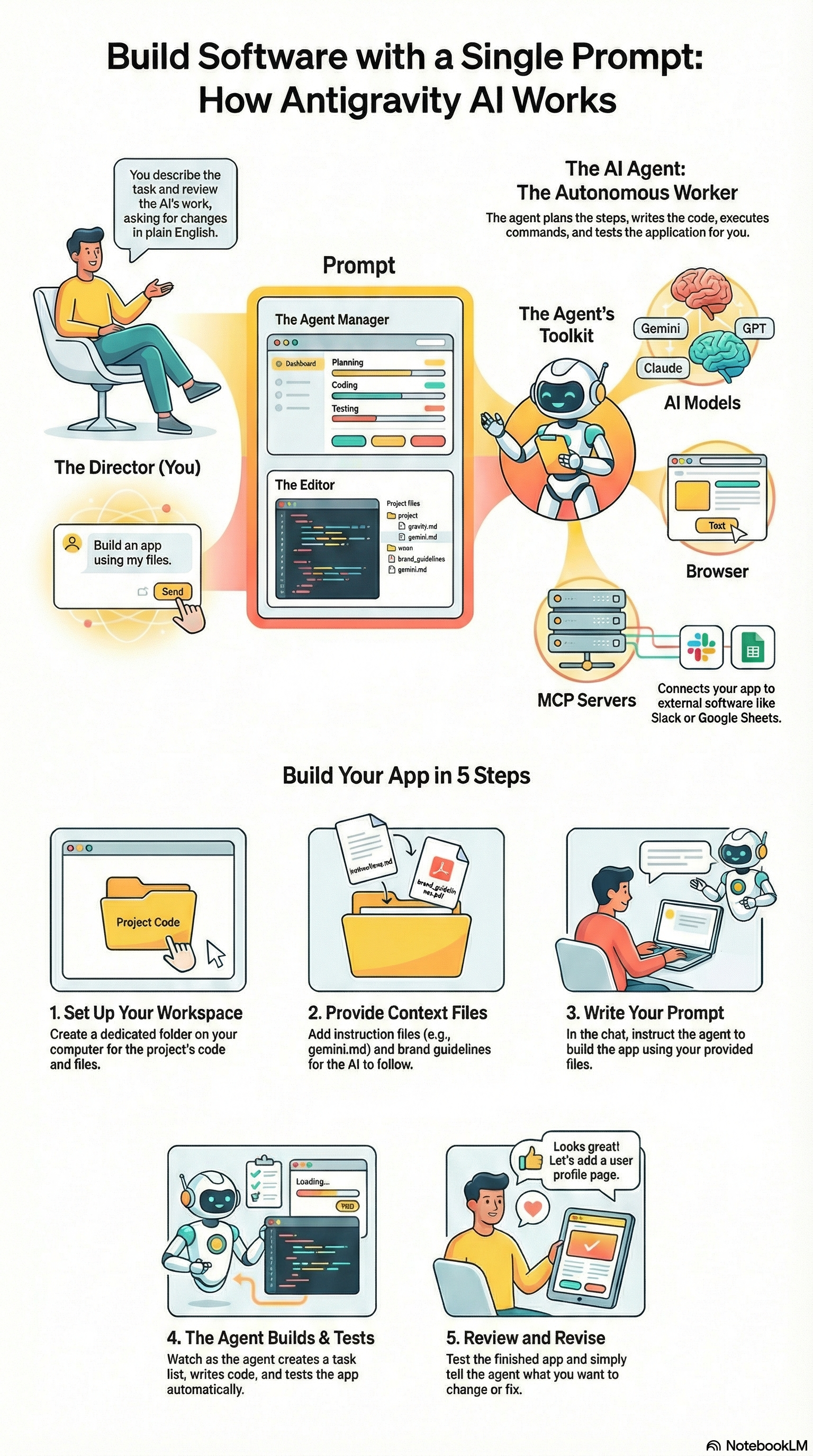 Illustration
Source: Dev.to AI
Illustration
Source: Dev.to AI
In this post, we’ll break down three major shifts happening right now: the rise of Google Antigravity, the transition to Agentic ERP systems, and why the future of AI is increasingly community-led and creative.
1. The Era of Vibe Coding: Google Antigravity
For years, we talked about "low-code" and "no-code" platforms. But in 2026, those terms feel outdated. The new gold standard is Google Antigravity, a tool that has popularized the concept of "Vibe Coding."
What is Vibe Coding?
Unlike traditional programming where you need to understand logic structures and syntax, Vibe Coding allows you to describe the feeling, intent, and flow of an application. You aren't just giving instructions; you are conveying a vision. Antigravity uses massive multi-modal models to turn natural language prompts into fully functional, scalable, and secure applications in real-time.
Real-World Success: MoneySense AI and MenuGo
We are already seeing the fruits of this technology. MoneySense AI, a personal finance startup launched just three months ago, was built entirely using Antigravity. The founders weren't engineers; they were financial advisors who "vibed" their domain expertise into a functional app. Similarly, MenuGo has revolutionized the restaurant industry by allowing owners to update their inventory and customer interface through simple voice commands, handled entirely by the Antigravity backend.
Actionable Insight for Business Owners: Stop looking for "developers" in the traditional sense. Look for "Architects of Intent"—individuals who understand your business logic and can translate it through platforms like Antigravity.
2. Reimagining the Enterprise: The Agentic ERP
For decades, Enterprise Resource Planning (ERP) systems were static databases—digital filing cabinets for your business data. As of early 2026, that era is over. According to recent insights from MIT Tech Review, we are witnessing the birth of the Agentic ERP.
 Illustration
Source: Google AI Blog
Illustration
Source: Google AI Blog
From Passive to Proactive
In the 20th century, you went to your ERP to find out what happened last month. In 2026, your ERP tells you what will happen next week and takes steps to mitigate risks. An Agentic ERP doesn't just store data; it houses a swarm of specialized AI agents that:
- Predict supply chain disruptions before they occur.
- Automatically re-negotiate vendor contracts based on real-time market fluctuations.
- Manage cash flow by autonomously shifting assets between high-yield accounts.
This isn't just automation; it's a fundamental reimagining of how a business organizes itself around technology. The ERP is no longer a tool; it's a digital workforce.
3. Human-Centric AI: The Sundance Initiative
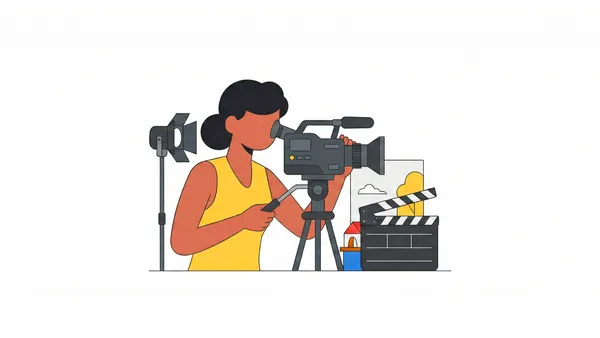
While the technical side of AI is moving at lightning speed, Google’s recent partnership with the Sundance Institute highlights a critical trend for 2026: AI as a creative partner, not a replacement.
This initiative focuses on community-led AI education for filmmakers and storytellers. It proves that the future of AI isn't just about efficiency; it's about expanding the boundaries of human expression. For businesses, this means that "content" is becoming more personalized and immersive than ever before. If a local filmmaker can use AI to achieve Hollywood-level production value, your business can use it to tell your brand story with unprecedented depth.
2026 Action Plan: How to Stay Ahead
As we navigate the first quarter of 2026, here is how you should position your business:
- Audit Your Tech Stack for Agency: Is your software waiting for you to tell it what to do, or is it working on your behalf? Prioritize tools that offer agentic capabilities.
- Master Prompt Engineering & Vibe Coding: Encourage your team to experiment with Google Antigravity. The ability to prototype an idea in minutes rather than weeks is the ultimate competitive advantage.
- Focus on Ethical Storytelling: As AI-generated content becomes the norm, authenticity becomes your most valuable currency. Use tools like those being developed in the Sundance-Google initiative to enhance your human voice, not replace it.
- Invest in AI Literacy, Not Just AI Tools: Technology changes, but the ability to think critically about how to apply that technology is a permanent skill.
Conclusion
The start of 2026 has confirmed one thing: the barrier between "idea" and "execution" has effectively vanished. Whether you are building an app via Google Antigravity, or managing a global enterprise through Agentic ERPs, the power is now in your intent.
At Abo-Elmakarem Shohoud's blog, we are committed to helping you navigate this agentic era. The future isn't automated; it's empowered. Are you ready to vibe with it?
What are your thoughts on Vibe Coding? Have you started implementing Agentic AI in your workflow? Let us know in the comments below!
Related Videos
How to make vibe coding not suck…
Channel: Fireship
The CEO of Google uses Replit to vibe Code!
Channel: startupCode