Beyond the Hype: Building a Sustainable AI Infrastructure in 2026

Beyond the Hype: Building a Sustainable AI Infrastructure in 2026
Welcome to February 2026. If the past two years were defined by the frantic race to adopt Generative AI, this year is defined by something far more critical: operational maturity.
 Illustration
Source: Dev.to AI
Illustration
Source: Dev.to AI
As businesses, we are no longer asking if AI can help us; we are asking how we can build a resilient, scalable, and transparent infrastructure that doesn't collapse under its own weight. To understand the current state of play, we need to look at three converging trends: the massive capital flow into infrastructure, the merging of development and machine learning operations, and the hidden technical debt that threatens to make our codebases invisible to the very AI we're trying to use.
1. The $100 Billion Bet: Stability at the Top
Recent reports surrounding Nvidia’s relationship with OpenAI have sparked significant conversation in the tech world. Despite rumors of friction, CEO Jensen Huang has reaffirmed a "huge" commitment, with Nvidia on track to invest up to $100 billion in OpenAI.
What this means for your business in 2026:
This isn't just a headline about two tech giants; it is a signal of infrastructure stability. For business owners, this level of investment ensures that the foundational models (like GPT-5 and its successors) will have the compute power necessary to become even more specialized and reliable. We are moving away from "general purpose" chatbots toward highly sophisticated, industry-specific reasoning engines. When the hardware provider (Nvidia) and the software pioneer (OpenAI) are this deeply entwined, it guarantees a roadmap of performance that businesses can actually bank on for long-term planning.
2. The Engine Room: Why DevOps + MLOps = Success
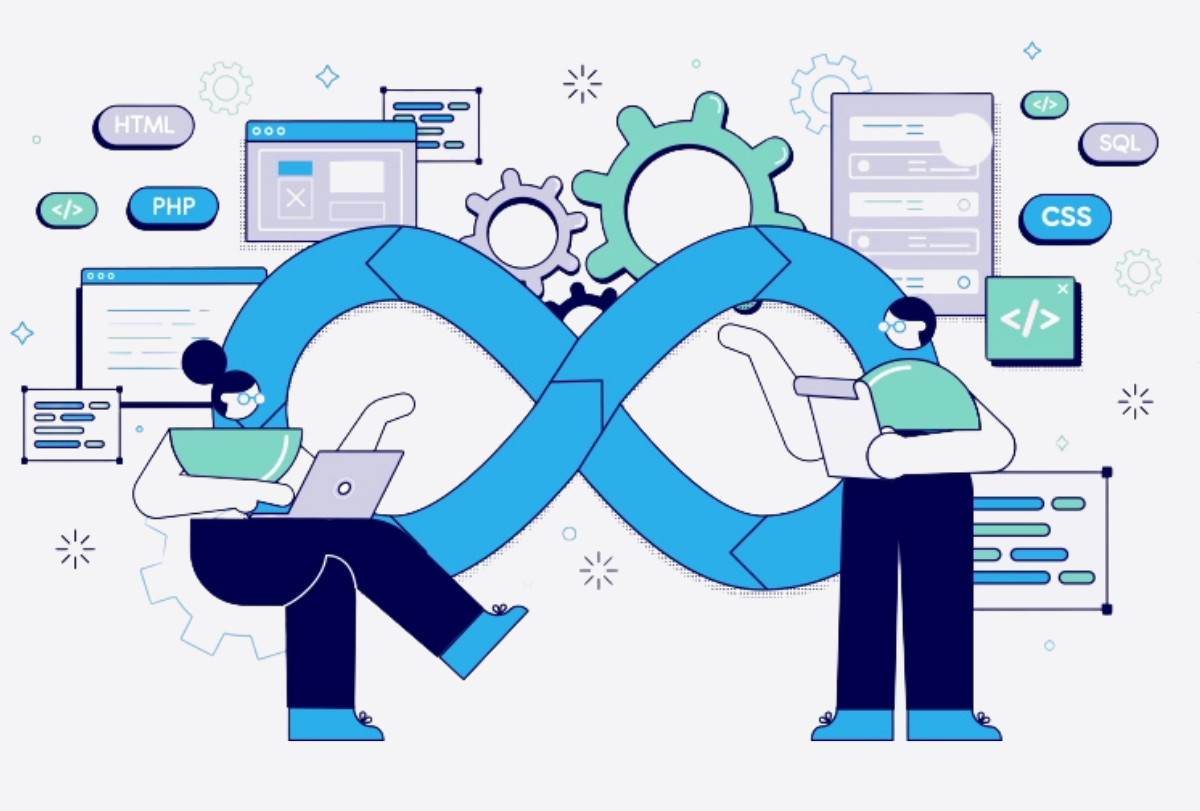
In 2026, the line between a software developer and a machine learning engineer has blurred. We are seeing the rise of a unified pipeline where DevOps meets MLOps.
 Illustration
Source: The Verge AI
Illustration
Source: The Verge AI
In the early days of AI adoption, many companies treated ML models as "black boxes"—deploying them once and hoping for the best. Today, that approach leads to failure. A unified pipeline ensures:
- Continuous Integration/Continuous Deployment (CI/CD): Just as you update your app's UI, your AI models must be updated with new data patterns instantly.
- Automated Monitoring: Models "drift." They get dumber over time as the real world changes. Integrated MLOps allows for automated retraining triggers that keep your AI sharp.
- Scalability: By using automated infrastructure, businesses can scale their AI capabilities from ten users to ten million without a manual overhaul.
The Business Value: Efficiency. A unified DevOps/MLOps strategy reduces the time-to-market for new AI features and ensures that your production models remain reliable and profitable.
3. The Invisible Codebase: Solving the AI Technical Debt
One of the most profound challenges we face in 2026 is what experts are calling "AI Code Debt." AI coding assistants like GitHub Copilot and Cursor have become standard, but they have a glaring weakness: they can only help you with what they can "see."
If your codebase is a mess of duplicated logic, inconsistent naming conventions, and scattered patterns, the AI will mirror that chaos. We’ve seen cases where AI suggests the same validation logic in three different ways within the same week. This happens because the underlying patterns are invisible to the AI’s reasoning.
How to make your codebase 'AI-Visible':
- Pattern Standardization: Move away from "clever" one-off solutions. Standardize your logic so the AI can recognize a pattern and replicate it accurately.
- Modularization: Break your code into clean, reusable modules. When an AI understands a module's purpose, it can suggest improvements across the entire stack.
- Documentation for Machines: In 2026, we don't just write comments for humans; we write them to guide the AI’s context window.
Actionable Takeaways for 2026
- Audit Your AI Strategy: Are you still treating AI as a plugin, or is it integrated into your DevOps pipeline? If it’s the former, 2026 is the year to transition to a unified MLOps framework.
- Refactor for Intelligence: Allocate 20% of your development time to cleaning up "AI-invisible" code. The productivity gains from having a codebase that AI can actually navigate will pay for itself in months.
- Invest in Partnerships, Not Just Tools: Look for vendors and partners who demonstrate the same long-term stability seen in the Nvidia/OpenAI alliance. Avoid "wrapper" startups that lack a deep infrastructure foundation.
Final Thoughts
As we look ahead through 2026, the winners won't be the ones with the flashiest AI demos. The winners will be those who built the best "plumbing." By focusing on unified pipelines and clean, pattern-driven codebases, you ensure that your business isn't just using AI—it's being powered by it.
At Abo-Elmakarem Shohoud’s portfolio blog, we specialize in bridging the gap between high-level AI theory and practical, bottom-line automation. Stay tuned for more insights into the 2026 tech landscape.