Beyond the Prompt: Why 2026 is the Year of AI Agent Management

Beyond the Prompt: Why 2026 is the Year of AI Agent Management
As we navigate the first quarter of 2026, the narrative surrounding Artificial Intelligence has undergone a fundamental transformation. For the past few years, the focus was on "chatting"—the art of the prompt. Today, that era is effectively over. We have entered the age of Agentic AI, where the primary role of a business professional is no longer to converse with a bot, but to manage a workforce of digital agents.
 Illustration
Source: Ars Technica AI
Illustration
Source: Ars Technica AI
This shift isn't just a marginal improvement; it’s a total overhaul of the corporate tech stack. Recent developments from industry titans and infrastructure experts provide a clear roadmap for where we are headed in this pivotal year.
The Dawn of the Supervisor Era: Claude 4.6 and OpenAI Frontier
The recent releases of Claude Opus 4.6 and OpenAI Frontier have signaled the end of the "Q&A" paradigm. As reported by Ars Technica, these companies are no longer marketing their models as sophisticated search engines. Instead, they are pitching them as autonomous entities capable of supervising complex workflows.
In 2026, the value proposition has shifted. While earlier models required step-by-step guidance, Claude 4.6 can now autonomously navigate a company’s internal software, identify a bottleneck in the supply chain, and draft a multi-step resolution plan—only asking for human approval at critical junctures. This is the "Managerial AI" model. You are no longer the writer; you are the editor-in-chief. You are no longer the coder; you are the product manager.
Comparison: The Old Chat vs. The New Agency
| Feature | The 2024 Chatbot Era | The 2026 Agent Era |
|---|---|---|
| Input | Single, complex prompts | High-level goals and constraints |
| Output | Text, code, or images | Completed tasks and cross-app actions |
| Autonomy | Zero; follows a linear path | High; can pivot based on real-time data |
| Integration | Isolated browser tabs | Deeply embedded via iPaaS |
The Corporate Cold War: Super Bowl Ads and Brand Identity
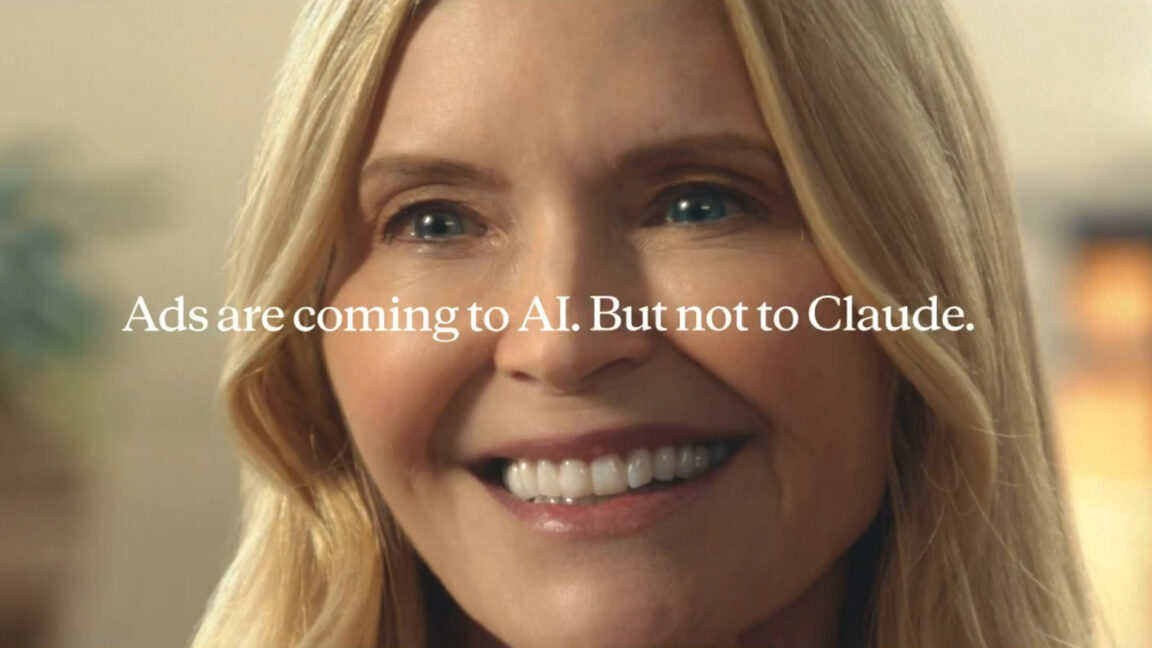
The transition to Agentic AI has intensified the rivalry between major players. The recent fallout on X (formerly Twitter) between Sam Altman and Anthropic’s leadership following the 2026 Super Bowl ads highlights the high stakes. OpenAI’s vocal criticism of Anthropic’s "authoritarian" messaging suggests that the battle is no longer just about benchmarks—it’s about trust and governance.
 Illustration
Source: Ars Technica AI
Illustration
Source: Ars Technica AI
For business owners, this drama is more than just tech gossip. It reflects a core tension in 2026: Should AI be a transparent, open-ended tool (the OpenAI pitch), or a highly-guardrailed, safety-first enterprise supervisor (the Anthropic pitch)? Choosing a side now will determine the flexibility and safety of your automation infrastructure for years to come.
The Infrastructure Backbone: Consolidation through iPaaS
An agent is only as good as its access to data. This is where the Integration Platform as a Service (iPaaS) becomes critical. As MIT Tech Review notes, enterprises have spent decades building "stopgap" solutions. To make AI agents viable in 2026, businesses are moving away from fragmented legacy systems toward consolidated iPaaS layers.
To rein in infrastructure costs and provide AI with the "real-time visibility" it needs, companies are layering their entire operations onto unified platforms. Without this consolidation, an AI agent is like a genius CEO with no phone and no internet; it has the capability but lacks the connectivity to execute.
The Pros and Cons of the Agentic Shift
Pros:
- Unprecedented Efficiency: Agents work 24/7, handling repetitive tasks like inventory management or first-tier customer support without fatigue.
- Scalability: You can deploy ten agents as easily as one, allowing for rapid business expansion without a proportional increase in headcount.
- Data-Driven Decision Making: Agents can analyze vast datasets from an iPaaS layer faster than any human analyst.
Cons:
- The "Black Box" Risk: As agents become more autonomous, tracing the logic behind a specific decision becomes more difficult.
- Integration Costs: Moving from siloed apps to a consolidated iPaaS requires significant upfront investment in 2026.
- Security Vulnerabilities: A hijacked agent with "manage" permissions is far more dangerous than a simple chatbot.
Strategic Recommendations for Businesses in 2026
To stay competitive in this new landscape, I recommend the following three-step strategy:
- Audit for Agency, Not Just Chat: Identify which departments are still using AI merely for drafting emails. These are your prime candidates for transformation. Move these workflows toward autonomous agents that can execute tasks within your CRM or ERP.
- Invest in iPaaS Consolidation: If your data is scattered across fifty different SaaS tools, your AI agents will fail. Prioritize the consolidation of your tech stack into a unified integration layer. This is the prerequisite for AI ROI in 2026.
- Redefine Your Workforce: Start training your employees to be AI Orchestrators. The most valuable skill in 2026 isn't knowing how to write a prompt; it's knowing how to audit an AI’s logic and manage its permissions.
The Verdict
The 2026 AI landscape is no longer about the "wow" factor of a bot that can write poetry. It is about the pragmatic, often invisible work of autonomous agents managing complex systems. Whether you prefer the "Frontier" approach of OpenAI or the safety-centric model of Claude, one thing is certain: those who continue to treat AI as a mere chatbot will be left behind by those who treat it as a management layer.
In 2026, the question is no longer "What can AI say?" but "What can AI do?" and more importantly, "Are you ready to manage it?"