Building Cost-Aware LLM Agents in 2026: A Guide to X API Integration and Linux Stability

By Abo-Elmakarem Shohoud | Ailigent
As we navigate the final quarter of 2026, the landscape of AI automation has shifted from simple chatbots to fully autonomous Agentic AI systems. However, with great power comes significant operational overhead. For business owners and tech professionals, the challenge is no longer just 'making it work'—it is making it work profitably. Today, we are seeing a massive shift in how APIs, specifically the X (formerly Twitter) API, are monetized. The days of predictable monthly tiers are largely behind us, replaced by a credit-based, pay-per-use model that can quickly drain a company's budget if not managed by a smart agent.
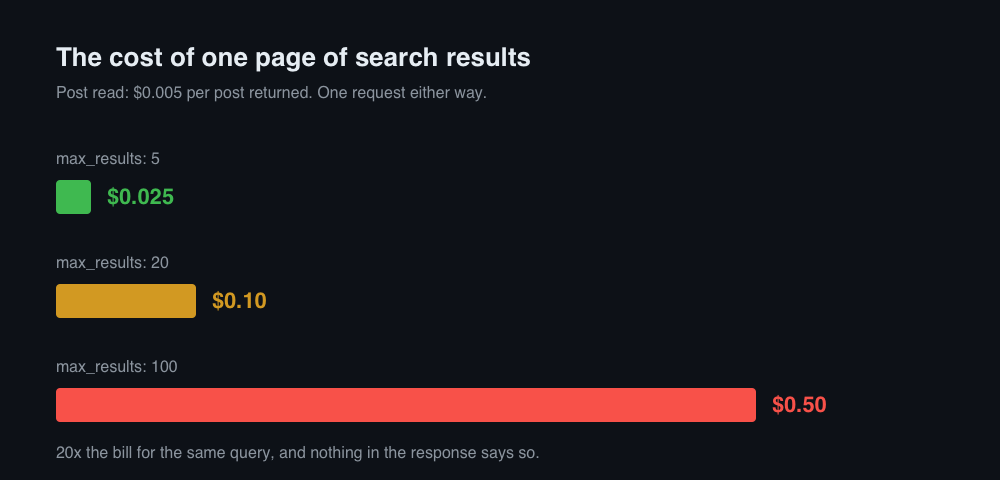 What the X API actually costs an LLM agent, per tool call
Source: Dev.to AI
What the X API actually costs an LLM agent, per tool call
Source: Dev.to AI
In this guide, I will walk you through the architecture of a cost-aware LLM agent, how to ensure your Linux infrastructure supports 24/7 reliability, and how to prevent your AI from spending your entire monthly budget in a single afternoon.
Understanding the 2026 AI Infrastructure Landscape
Before we dive into the 'how-to', we must define the tools we are working with.
Agentic AI is a paradigm where AI systems are given high-level goals and the autonomy to select tools, execute tasks, and iterate toward a solution without constant human prompting.
A Machine Learning Model is a mathematical representation of patterns found in data, used to make predictions or decisions without being explicitly programmed for every scenario.
In 2026, the X API has moved to a strict credit-based system for new developers. This means every time your agent 'thinks' it needs to check a trending topic or post a reply, it is spending real-time currency. At Ailigent, we have found that without a 'cost-gatekeeper' logic, an LLM agent can easily perform thousands of unnecessary tool calls, leading to 'bill shock'.
Comparison of X API Access Tiers (September 2026)
| Tier | Cost Structure | Best For | Typical Tool Call Cost |
|---|---|---|---|
| Credit-Based (New) | Pay-per-request (Credits) | Startups & Dynamic Agents | $0.05 - $0.25 |
| Legacy Pro | $5,000 / month | Established 2024-era apps | Fixed (within limits) |
| Enterprise | $42,000+ / month | Global Corporations | Custom Negotiated |
Prerequisites for Building Your Agent
To follow this guide, you will need:
- A Linux-based server (Ubuntu 24.04 or later recommended).
- Python 3.12+ installed.
- An X Developer Account with a loaded credit balance.
- Access to a frontier LLM (like GPT-5 or Claude 4) via API.
- Basic knowledge of
systemdfor process management.
Step 1: Optimizing the Linux Foundation for Agent Resilience
Your agent is only as good as the uptime of the machine it runs on. Understanding how Linux boots is critical for ensuring your agent restarts automatically after a failure or update.
The Linux Boot Process is the sequence of events from the moment you power on a machine (Firmware/BIOS) to the initialization of the kernel and the launching of system services (systemd).
To ensure your agent starts immediately after the kernel finishes loading, create a systemd service file:
# /etc/systemd/system/ai-agent.service
[Unit]
Description=Ailigent Cost-Aware LLM Agent
After=network.target
*Source: freeCodeCamp*
[Service]
ExecStart=/usr/bin/python3 /opt/ai-agent/main.py
Restart=always
RestartSec=5
User=aiuser
[Install]
WantedBy=multi-user.target
Running systemd-analyze on your server will help you identify bottlenecks in your boot time, ensuring your 2026 automation stack is lean and fast.
Step 2: Designing the Machine Learning 'Cost-Brain'
Instead of letting the LLM call the X API directly, we insert a 'Cost-Aware Layer'. This is a small ML model or a set of heuristic rules that predicts the value of a tool call before it happens.
A Feature is an individual measurable property or characteristic of a phenomenon being observed, used as input for ML models to make decisions.
In our case, the features for our cost-brain include:
- Current X API credit balance.
- Priority of the current task (High/Low).
- Estimated engagement of the post.
- Time of day (peak vs. off-peak).
Step 3: Implementing the X API Credit Monitor
Since the X API now consumes credits in real-time, your Python script must check the balance before every tool call. Abo-Elmakarem Shohoud recommends implementing a 'Budget Circuit Breaker' to prevent runaway loops.
import x_api_sdk

class CostAwareXClient:
    def __init__(self, api_key, credit_limit):
        self.client = x_api_sdk.Client(api_key)
        self.credit_limit = credit_limit
        self.total_spent = 0

    def safe_post_tweet(self, text):
        # Check current credit cost for a 'post' action
        cost = self.client.get_action_cost('post_tweet')

        if (self.total_spent + cost) > self.credit_limit:
            print("Budget exceeded! Agent entering hibernation.")
            return None

        response = self.client.post_tweet(text)
        self.total_spent += cost
        return response
Step 4: Connecting the LLM to the Tools
In 2026, we use 'Function Calling' to give the LLM access to our CostAwareXClient. When the LLM decides it wants to tweet, it generates a JSON object. Our system intercepts this, calculates the cost, and decides whether to proceed based on the budget we set in Step 3.
Step 5: Monitoring and Scaling
As you scale your automation, you will find that different ML models have different 'intelligence-to-cost' ratios. For simple status updates, a smaller, cheaper model (like a quantized Llama 4) might suffice. For complex community engagement, you'll need the full power of a frontier model.
At Ailigent, we recommend a tiered model approach:
- Level 1 (Tiny Model): Filters incoming mentions (Low cost).
- Level 2 (Medium Model): Drafts responses and checks budget (Medium cost).
- Level 3 (Frontier Model): Finalizes high-value thought leadership posts (High cost).
Troubleshooting Common Issues in 2026
- Credit Exhaustion: If your agent stops responding, check the X Developer Console. You may need to set up 'Auto-Top-Up' but be careful to set a hard ceiling at the bank level.
- Linux Boot Failures: If
systemd-analyzeshows the 'loader' phase is taking too long, check your UEFI settings or disk health. A slow boot means your agent is offline longer during updates. - Model Hallucination on Costs: Sometimes the LLM might think a tool call is free. Always enforce the cost-check at the code level, never rely on the LLM's 'memory' of the pricing.
Key Takeaways
- Monitor Every Cent: In the 2026 credit-based API economy, autonomous agents must be programmed with financial constraints to avoid unexpected expenses.
- Foundation Matters: High-performance AI automation requires a deep understanding of the Linux boot process and service management to ensure 99.9% uptime.
- Layered Intelligence: Use a combination of small heuristic ML models for cost-gating and large frontier models for high-value execution to optimize your ROI.
By following this architecture, you ensure that your AI automation efforts under the guidance of experts like Abo-Elmakarem Shohoud remain both cutting-edge and commercially viable.
Related Videos
How to Setup & Run OpenClaw with Ollama on Ubuntu Linux and Zero API Cost (2026)
Channel: ProgrammingKnowledge
This Is A Game Changer
Channel: ThePrimeagen