Building Private AI Agents: A 2026 Guide to Automating Repetitive Tasks with Local LLMs and MLOps

By Abo-Elmakarem Shohoud | Ailigent
Introduction: The Death of Repetitive Data Entry in 2026
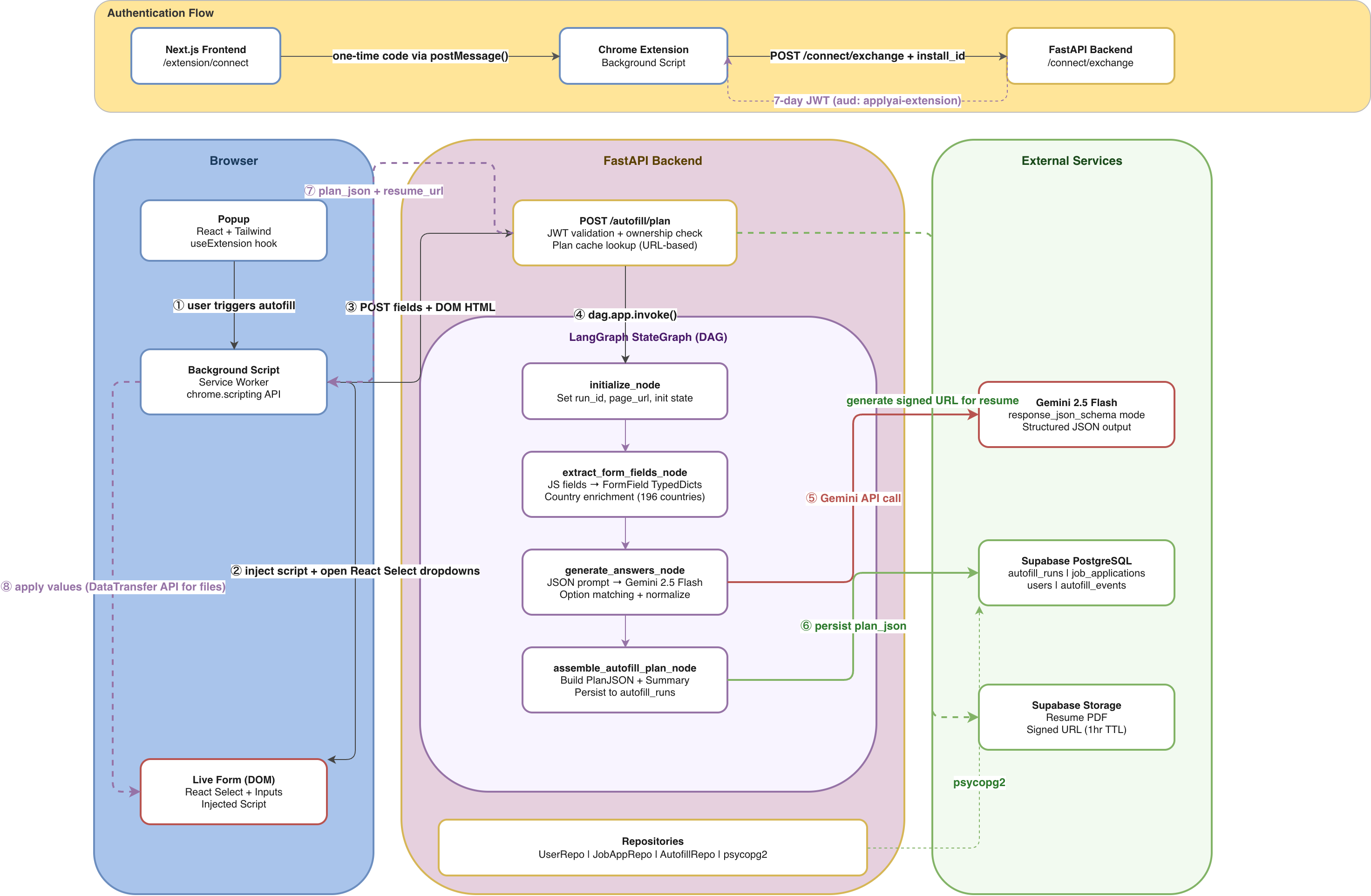 I Got Tired of Filling Out the Same Form 50 Times, So I Built an AI to Do It
Source: Dev.to AI
I Got Tired of Filling Out the Same Form 50 Times, So I Built an AI to Do It
Source: Dev.to AI
It is March 06, 2026, and the landscape of productivity has shifted fundamentally. We no longer live in a world where professionals should spend ten minutes filling out a job application or a procurement form. Yet, many still do. The frustration is universal: you open a form, type your name, paste your LinkedIn URL, and answer the same compliance questions for the hundredth time. In a world powered by Agentic AI, this is not just inefficient—it is a waste of human potential.
However, a significant barrier has always been data privacy. Business owners and tech professionals are rightly hesitant to feed sensitive personal or corporate data into public cloud APIs. This tutorial will bridge that gap. We will explore how to build a private, local AI agent that can handle these repetitive tasks using Ollama for privacy and MLflow for lifecycle management. At Ailigent, we believe that the future of automation belongs to those who can balance efficiency with absolute data sovereignty.
Learning Objectives
By the end of this guide, you will be able to:
- Understand the architecture of local LLM-based automation.
- Set up a local environment using Ollama to process sensitive data.
- Create a Python-based agent to automate form filling and data extraction.
- Implement MLOps principles using MLflow to ensure your automation is reproducible and scalable.
Fundamentals: Defining the 2026 Tech Stack
Before we dive into the code, let's define the core concepts that drive modern automation.
Agentic AI is a paradigm where AI systems are designed to take actions autonomously to achieve specific goals, rather than just generating text. Unlike a simple chatbot, an agent can interact with your browser, read your files, and execute logic based on the environment.
Local LLM is a Large Language Model that runs entirely on your own hardware without sending data to third-party servers. In 2026, models like Llama 3.5 and Mistral-Next have reached a point where they can run efficiently on modern consumer GPUs or even high-end unified memory laptops, providing GPT-4 level reasoning without the privacy risks.
MLOps is the set of practices that aims to deploy and maintain machine learning models in production reliably and efficiently. As Abo-Elmakarem Shohoud often emphasizes to clients, an automation script is just a toy until it is wrapped in an MLOps framework that tracks versions, performance, and data lineage.
Comparison: Cloud vs. Local LLMs for Automation
| Feature | Cloud-Based LLMs (e.g., GPT-4o) | Local LLMs (via Ollama) |
|---|---|---|
| Data Privacy | Subject to Provider Policies | 100% Private (On-premise) |
| Latency | Dependent on Internet/API | Hardware-dependent (often faster) |
| Cost | Per-token pricing (Variable) | Hardware cost (Fixed) |
| Customization | Limited to Fine-tuning APIs | Full control over weights & config |
| Reliability | Depends on API Uptime | Depends on local infrastructure |
Step 1: Setting Up Your Privacy-First Environment
To begin, we need a way to run our models locally. Ollama has become the industry standard for this in 2026. It provides a simple CLI and API to manage local models.
Installation
- Download Ollama from its official repository.
- Run your first model:
ollama run llama3.1:8b(or the latest 2026 equivalent). - Ensure the API is accessible at
http://localhost:11434.
By running locally, you ensure that when you feed your resume or corporate financial data into the agent, not a single byte leaves your local network. This is the gold standard for compliance-heavy industries like finance or healthcare.
Step 2: Building the Extraction Agent
The first part of our automation is extracting data from a source (like your CV or a corporate database) and formatting it for a form. We will use Python for this.
import requests
import json

*Source: freeCodeCamp*
def extract_data_locally(prompt, context_document):
url = "http://localhost:11434/api/generate"
payload = {
"model": "llama3.1",
"prompt": f"Extract the following fields from this document: Name, Email, Experience. Document: {context_document}",
"stream": False,
"format": "json"
}
response = requests.post(url, json=payload)
return response.json()['response']
# Example usage
resume_text = "Abo-Elmakarem Shohoud is an AI expert at Ailigent with 10 years of experience..."
structured_data = extract_data_locally("Extract details", resume_text)
print(structured_data)
In this snippet, we are instructing the local model to return a JSON object. This is a critical step because forms require structured data, not conversational prose.
Step 3: Automating the UI with Playwright
Now that we have the data, we need to inject it into the form. We use Playwright, a powerful browser automation library.
- Identify the Selectors: Use browser dev tools to find the IDs or Names of the input fields.
- Map the Data: Create a mapping between your extracted JSON and the form fields.
from playwright.sync_api import sync_playwright

def fill_form(data):
    with sync_playwright() as p:
        browser = p.chromium.launch(headless=False)
        page = browser.new_page()
        page.goto("https://example-job-portal.com/apply")

        page.fill('input[name="full_name"]', data['Name'])
        page.fill('input[name="email"]', data['Email'])
        # For dropdowns
        page.select_option('select[name="country"]', label="Egypt")

        print("Form filled successfully!")
        # In 2026, we always review before final submission
        browser.close()
Step 4: Scaling with MLOps (MLflow and Databricks)
As you build more agents, you'll find that different models perform better on different forms. This is where MLOps becomes essential. MLflow is an open-source platform to manage the ML lifecycle, including experimentation, reproducibility, and deployment.
By integrating MLflow, you can track which model version (e.g., Llama 3.1 vs Mistral 7B) had the highest accuracy in filling out complex forms. If you are working within a large enterprise, using Databricks allows you to scale these local experiments into a unified data intelligence platform.
Why MLOps Matters for Business Owners:
- Reproducibility: If an automation fails, you can trace back to the exact model version and prompt used.
- Scalability: Move from one bot on one laptop to a fleet of bots across the organization.
- Governance: Monitor how AI is interacting with sensitive data to ensure it adheres to 2026 security standards.
Business Value: The ROI of Privacy-First Automation
For a business, the value isn't just in the time saved (though saving 8 minutes per form across 100 employees is massive). The real value is in Risk Mitigation. In 2026, data breaches are more expensive than ever. By using local LLMs for these tasks, you eliminate the risk of "Shadow AI"—where employees use unauthorized cloud tools to get their work done, inadvertently leaking company secrets.
At Ailigent, we've seen companies reduce their document processing costs by up to 70% while improving their security posture by moving these workloads to local, managed environments.
Exercise: Try It Yourself
Challenge: Build an agent that reads a meeting transcript and automatically fills out a "Meeting Summary" form on your internal company portal.
- Use Ollama to summarize the text into three bullet points: "Decisions Made," "Action Items," and "Next Meeting Date."
- Use Playwright to navigate to your internal portal and paste these summaries into the respective fields.
- Track the success rate of the summary extraction using a simple local log file or MLflow experiment.
Key Takeaways
- Privacy is Non-Negotiable: In 2026, using local LLMs (via Ollama) is the only way to ensure 100% data sovereignty for sensitive automation tasks.
- Agentic Workflows > Chatbots: Move beyond simple text generation. Use AI to take actions like UI automation with Playwright to reclaim your time.
- MLOps is the Foundation: Use tools like MLflow to manage your automation scripts as professional software assets, ensuring they are reproducible and reliable.
- Human-in-the-Loop: Always include a review step in your automation to verify the AI's work before final submission.
Bottom Line
The era of manual form-filling is over. By combining local LLM power with robust MLOps practices, you can build automation that is not only fast but also secure and scalable. Whether you are a solo developer or a CTO at a major firm, the tools available in 2026 make it easier than ever to turn "tired of filling forms" into a competitive business advantage.
Next Steps: Explore the MLflow documentation to learn how to track your prompt engineering experiments and check out the Ollama library for the latest models optimized for local hardware.
Related Videos
AI Agents vs LLMs vs RAGs vs Agentic AI | Rakesh Gohel
Channel: Rakesh Gohel
Let The LLM Write The Prompt 2025 | Design Perfect Prompts for AI Agent | Prompt Mistakes (PART 1/7)
Channel: Amine DALY