Building Secure AI Agents in 2026: Why 'Free' Models Are a Trap and How to Use MCP Instead

By Abo-Elmakarem Shohoud | Ailigent
As we navigate the final quarter of 2026, the AI landscape has shifted from simple chatbots to complex, autonomous agents. However, with this evolution comes a dangerous trend: the 'democratization' of high-tier models through free hosting services that often compromise corporate security. For business owners and tech leads, the challenge is no longer just finding a powerful model, but finding a way to integrate it safely into internal workflows.
 NVIDIA will run GLM-5.3 and Kimi K3 for you, for free. I read the fine print. Here are the three catches.
Source: Dev.to AI
NVIDIA will run GLM-5.3 and Kimi K3 for you, for free. I read the fine print. Here are the three catches.
Source: Dev.to AI
In this guide, I will break down why you should be wary of 'free' enterprise-grade models like NVIDIA’s recent GLM-5.3 and Kimi K3 offerings, and instead, how to build a robust, 'Secure by Design' architecture using the Model Context Protocol (MCP).
The Illusion of Free: Why NVIDIA’s 2026 Offerings Require Caution
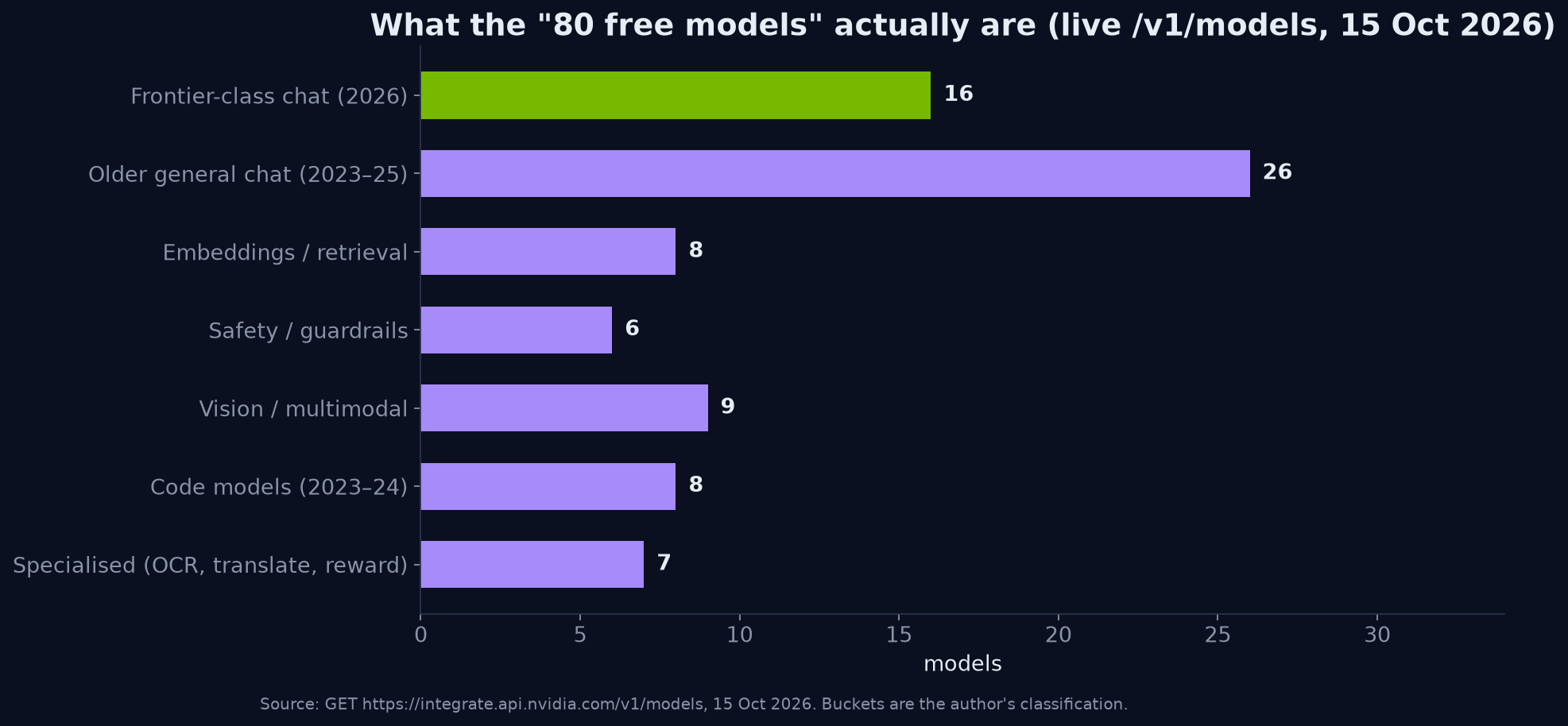
You have likely seen the headlines: "Stop paying $20/month, NVIDIA hosts 80+ AI models for free." While technically true, the fine print of these 2026 service agreements reveals a different story. For any serious business operation managed by Ailigent, these 'free' endpoints represent a significant compliance liability.
First, NVIDIA’s terms of service explicitly state "not in production"—not once, but twice. This means if your automated customer service agent fails or leaks data while running on these endpoints, you have zero legal recourse. Second, and perhaps most concerningly for 2026 data privacy standards, the clause allows NVIDIA to use your prompts to improve their models. In an era where proprietary data is a company's greatest asset, feeding your internal logic into a public training loop is a strategic error.
Furthermore, rate limits on these free tiers are static. As Abo-Elmakarem Shohoud often emphasizes to clients, scalability is the backbone of automation. Relying on an endpoint that moderators confirm will "never have its limits raised" is a recipe for a bottlenecked business.
Understanding the Core Concepts
Before we dive into the technical implementation, let's define the two pillars of secure AI automation in 2026:
Agentic AI is... a paradigm where AI systems are designed to autonomously execute multi-step tasks, make decisions, and interact with software tools to achieve a specific goal without constant human intervention.
Model Context Protocol (MCP) is... an open standard that enables AI agents to securely connect to external data sources and internal APIs, providing a standardized way for models to 'read' your business context without exposing the entire database.
Secure by Design is... an engineering approach where security protocols, threat modeling, and data boundaries are integrated into the initial architectural phase of a project rather than being patched on after deployment.
Prerequisites for Building Secure AI Workflows
To follow this guide, you will need:
- Access to a production-ready LLM (e.g., Claude 4, GPT-5, or self-hosted Llama-4 via private VPC).
- An internal API you wish to automate (e.g., a CRM, inventory system, or on-call notes API).
- A basic understanding of JSON and environment variable management.
- An MCP-compliant server (we will use a Node.js implementation for this guide).
Step 1: Architecting Security Before the First Line of Code
 How to Give an AI Agent Safe Access to an Internal API with MCP
Source: freeCodeCamp
How to Give an AI Agent Safe Access to an Internal API with MCP
Source: freeCodeCamp
In 2026, security is not a checkbox; it is the foundation. Most teams fail because they ship a feature and then run a penetration test. Instead, we must use the "Secure by Design" philosophy.
Start by mapping your data flows. If your AI agent needs to access an internal API, it should never have 'Admin' privileges. Create a scoped API key that only allows 'GET' requests for specific endpoints. Use a 'human-in-the-loop' gate for any 'POST' or 'DELETE' actions. This architectural decision ensures that even if the AI experiences a 'hallucination' or prompt injection, the physical damage to your database is zero.
Step 2: Setting Up the Model Context Protocol (MCP) Server
The Model Context Protocol is the gold standard for AI-to-API communication in 2026. It acts as a secure translator. Instead of giving the AI your full API documentation, the MCP server tells the AI exactly what tools are available and what the constraints are.
Example MCP Configuration (JSON)
{
  "mcpServers": {
    "internal-notes-api": {
      "command": "npx",
      "args": ["-y", "@ailigent/mcp-internal-api-bridge"],
      "env": {
        "API_KEY": "sk_prod_55921",
        "SCOPE": "read_only"
      }
    }
  }
}
By using this structure, the AI agent interacts with the MCP bridge, which validates every request against your security policy before hitting your internal servers.
Step 3: Implementing the Secure Bridge
Now, we create the logic that allows the AI to query your internal data safely. Here is a simplified Node.js snippet for an MCP tool that fetches on-call schedules without exposing employee PII (Personally Identifiable Information):
// mcp-tool-definition.js
server.tool("get_on_call_status",
  { date: "string" },
  async ({ date }) => {
    const response = await internalApi.fetch(`/on-call?date=${date}`);
    // Sanitize data: only return names and roles, not phone numbers
    return response.map(staff => ({ name: staff.name, role: staff.role }));
  }
);
This abstraction layer is what separates professional AI implementations from amateur ones. At Ailigent, we ensure that every AI agent operates within a 'sandbox' of information.
Comparison: 2026 AI Infrastructure Approaches
| Feature | NVIDIA Free NIMs | Self-Hosted (Llama-4) | Managed Enterprise (MCP-based) |
|---|---|---|---|
| Production Ready | No (TOS violation) | Yes | Yes |
| Data Privacy | Low (Prompts used for training) | High (Full control) | High (SOC2/GDPR Compliant) |
| Scalability | Fixed Rate Limits | High (Hardware dependent) | Dynamic Scaling |
| Security | Minimal | Maximum | Balanced & Managed |
| Setup Cost | $0 | High (GPU costs) | Moderate (Subscription) |
Troubleshooting Common Issues
- Rate Limit Errors: If you are testing on free tiers and hit a 429 error, there is no fix. You must migrate to a paid tier or a local instance. 2026 models are resource-heavy; don't expect free lunch.
- MCP Connection Refused: Ensure your environment variables (API_KEY) are correctly loaded. Most MCP failures in 2026 stem from strict CORS policies or expired tokens.
- Model Hallucinations in Tools: If the AI tries to call a tool that doesn't exist, refine your MCP 'tools' description. The more descriptive the JSON schema, the better the agent performs.
Key Takeaways
- Avoid the 'Free' Trap: NVIDIA's free models in 2026 are for prototyping only. Never use them for production data or proprietary workflows due to privacy clauses.
- Adopt MCP: The Model Context Protocol is essential for secure, scalable AI-to-internal-API communication. It provides the necessary abstraction to protect your data.
- Security First: Implement 'Secure by Design' by scoping API permissions to the absolute minimum required for the AI agent to function.
- Scalability Matters: Always architect your AI systems with the assumption that your request volume will grow. Avoid platforms with 'un-raisable' rate limits.
Bottom Line: Building AI in 2026 is about more than just intelligence; it's about integrity. By following the frameworks used by Abo-Elmakarem Shohoud and the Ailigent team, you can harness the power of Agentic AI without sacrificing your company's security or data sovereignty.
Related Videos
What is MCP? Integrate AI Agents with Databases & APIs
Channel: IBM Technology
MCP vs Skills: Which Is Right for Your AI Agent and LLMs?
Channel: IBM Technology