Connectivity, Agency, and Truth: Navigating the AI Landscape of March 2026

By Abo-Elmakarem Shohoud | Ailigent
As we enter the first week of March 2026, the convergence of infrastructure, autonomous software, and information integrity has reached a fever pitch. In just the last few days, we have seen massive capital movements in IT services, a paradigm shift in how consumers interact with their smartphones, and a sobering reminder of the challenges inherent in a world where seeing is no longer believing. For business owners and tech professionals, these developments are not just headlines; they represent the new operational baseline for the current fiscal year.
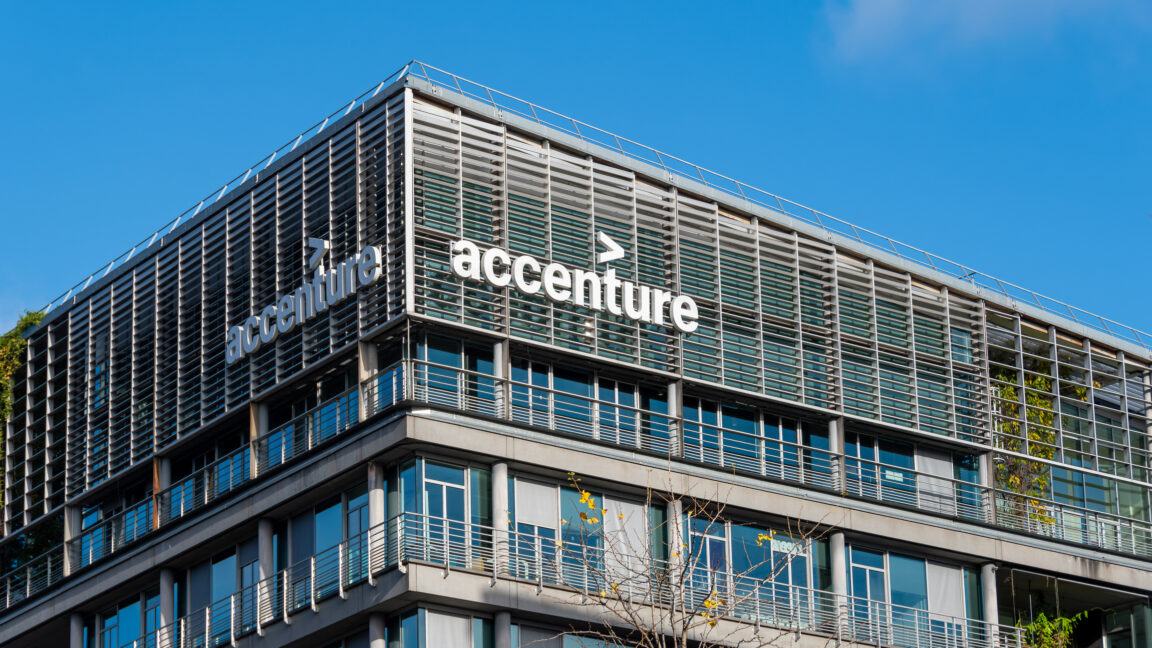 Downdetector, Speedtest sold to IT service provider Accenture in $1.2B deal
Source: Ars Technica AI
Downdetector, Speedtest sold to IT service provider Accenture in $1.2B deal
Source: Ars Technica AI
The $1.2 Billion Bet on Connectivity Intelligence
Accenture’s announcement this week that it is acquiring Ookla (including Speedtest, Downdetector, and RootMetrics) for $1.2 billion marks a significant pivot in the IT services sector. While Accenture has long been a leader in digital transformation, this acquisition signals that connectivity data is now as valuable as the AI models that run on top of it.
Network Intelligence is the systematic collection and analysis of data regarding network performance, latency, and reliability to optimize digital operations.
For years, business leaders viewed connectivity as a utility—like electricity. In 2026, connectivity is the lifeblood of the AI-driven enterprise. By owning Downdetector and Speedtest, Accenture is positioning itself to offer "Predictive Infrastructure Management." Imagine a scenario where a global logistics company can predict a regional cloud outage 30 minutes before it happens because of real-time crowdsourced data from Downdetector, allowing their AI agents to reroute server loads autonomously. This is the level of resilience that Abo-Elmakarem Shohoud and the team at Ailigent advocate for when building modern automation stacks.
Why This Matters for Business ROI
- Reduced Downtime: The cost of a single hour of downtime for a Tier-1 enterprise in 2026 exceeds $1 million. Predictive data minimizes this risk.
- Edge Computing Optimization: As more AI processing moves to the edge, knowing exactly where 5G and satellite latency is lowest becomes a competitive advantage for real-time applications.
- M&A Trends: We are seeing a trend where service providers are becoming data owners. Businesses should look for partners who don't just manage their systems but provide proprietary insights into the global digital environment.
The Dawn of the Agentic Era: Google’s Pixel 10 and Gemini
The latest "Pixel Drop" for March 2026 has officially moved Gemini from a chatbot to an agent. With the integration first teased at Samsung’s Unpacked event, Pixel 10 users can now delegate multi-step tasks to their AI. Ordering groceries or booking a ride is no longer about the AI giving you a link; it is about the AI executing the transaction on your behalf.
Agentic AI is a paradigm where AI systems are designed to autonomously pursue complex goals and perform actions across multiple software environments with minimal human intervention.
This shift from "Generative" to "Agentic" is the most significant change in consumer tech since the launch of the original iPhone. For businesses, this means the customer journey has changed. Your customer is no longer a human browsing a website; your customer is an AI agent acting on behalf of a human.
 Google’s latest Pixel drop allows Gemini to order groceries for you and more
Source: The Verge AI
Google’s latest Pixel drop allows Gemini to order groceries for you and more
Source: The Verge AI
Comparison: Generative vs. Agentic AI (2026 Context)
| Feature | Generative AI (2024 Era) | Agentic AI (Current 2026) |
|---|---|---|
| Primary Goal | Content Creation (Text/Images) | Task Execution (Transactions/Workflows) |
| Interaction | Prompt -> Response | Goal -> Autonomous Steps |
| Environment | Isolated Chat Window | OS-level & API Integration |
| Business Impact | Efficiency in Drafting | Direct Revenue Conversion |
| Success Metric | Accuracy of Output | Completion of Task |
If your business website is not optimized for AI agents to "read" and "interact" with your checkout process, you are essentially invisible to the millions of Pixel and Samsung users who are now letting Gemini handle their daily chores. At Ailigent, we emphasize that API-first architecture is no longer optional; it is the prerequisite for existence in the agentic economy.
The Truth Crisis: Deepfakes in Geopolitics and Business
While we celebrate the efficiency of AI agents, the recent military strikes involving the US, Israel, and Iran have highlighted the darker side of the technology. The flood of AI-generated images and videos from these conflicts—some even using footage from video games like War Thunder—has made real-time verification nearly impossible for the average citizen.
This isn't just a political problem; it's a corporate security nightmare. In 2026, we are seeing "CEO Fraud 2.0," where deepfake video calls are used to authorize massive wire transfers or leak sensitive intellectual property. The Verge’s report on how experts at the NYT and Bellingcat verify content shows that the tools of journalism are now required tools for corporate security.
Digital Provenance is the record of the origin and history of a piece of digital content, often secured via blockchain or cryptographic watermarking to ensure its authenticity.
Actionable Business Security Protocols
- Implement C2PA Standards: Ensure all corporate communications use the Coalition for Content Provenance and Authenticity standards to watermark official videos.
- Zero-Trust Communication: Move away from "visual verification." If a high-stakes request comes via video call, use a secondary, out-of-band authentication method (e.g., a hardware security key or a pre-shared physical code).
- Employee Training: Train staff to recognize the subtle artifacts of 2026-era deepfakes, which often struggle with consistent lighting in rapid movements or specific localized reflections.
The Synthesis: Building a Resilient 2026 Strategy
What do a $1.2B infrastructure deal, an AI grocery shopper, and deepfake warfare have in common? They all point toward a world where the physical and digital are inseparable.
Accenture is buying the "nerves" (the network), Google is providing the "hands" (the agents), and the deepfake crisis is attacking the "eyes" (our perception of truth). To thrive this year, businesses must invest in all three areas. You need the connectivity to run your agents, the agents to serve your customers, and the verification protocols to protect your brand.
As Abo-Elmakarem Shohoud often notes in his consultations, automation is not a "set it and forget it" solution. It is a dynamic ecosystem. The businesses that will dominate the remainder of 2026 are those that treat AI as an active participant in their business model, not just a tool in their shed.
Key Takeaways
- Connectivity is Strategic: Don't treat your internet and cloud latency as a baseline expense. Use network intelligence to predict and bypass outages before they hit your bottom line.
- Optimize for Agents: Ensure your digital storefronts and services are accessible to AI agents like Gemini. If an AI can't buy from you, a human soon won't either.
- Verify by Default: In the age of deepfakes, trust nothing that isn't cryptographically signed. Establish a "Digital Truth Protocol" for your internal and external communications.
- Invest in Resilience: Follow the lead of firms like Accenture; prioritize data that gives you a macro-view of the digital environment to stay ahead of global shifts.
By staying informed and adopting these agentic and defensive postures, you can turn the volatility of 2026 into a structured advantage for your organization.