How to Build an AI-Driven Recruitment Pipeline: A Guide for 2026 Engineering Leaders

By Abo-Elmakarem Shohoud | Ailigent
In 2026, the traditional distinction between HR processes and engineering workflows has effectively vanished. For high-growth technology firms, hiring is no longer just a 'people problem'; it is a technical bottleneck that impacts engineering velocity, product roadmaps, and overall market competitiveness. When senior engineers spend 40% of their week interviewing candidates who don't meet the technical bar, the cost isn't just the salary of the recruiter—it’s the delayed release of features that define the company’s future.
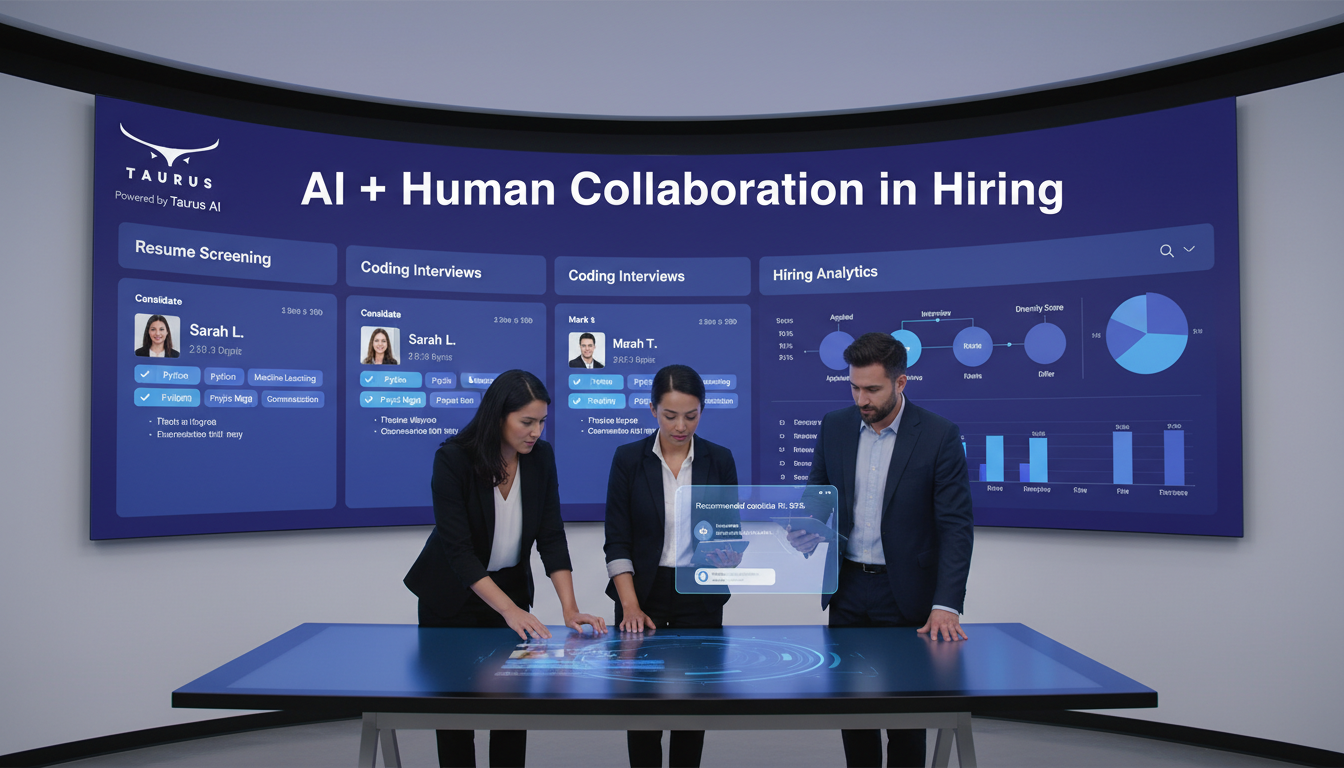 Why AI Recruitment Pipelines Are Becoming Part of Modern Engineering Workflows
Source: Dev.to AI
Why AI Recruitment Pipelines Are Becoming Part of Modern Engineering Workflows
Source: Dev.to AI
At Ailigent, we have seen a massive shift this year toward 'Recruitment as Code.' This involves treating the talent funnel exactly like a CI/CD pipeline. Just as we automate testing and deployment, we are now automating the sourcing, screening, and contextual evaluation of candidates using Agentic AI. This guide will walk you through building a 'Recruitment Intelligence Copilot'—a tool that goes beyond simple keyword matching to provide deep, LLM-driven insights into candidate potential.
The 2026 Context: Why Automation is Non-Negotiable
The job market in 2026 is characterized by an overwhelming volume of applications powered by AI-assisted job searching. As candidates use automated tools to apply for hundreds of roles, engineering teams are being flooded with resumes. Manual screening is now impossible at scale.
Agentic AI is a paradigm where AI systems are designed to act as autonomous agents that can plan, use tools, and make decisions to achieve complex goals. In recruitment, this means an agent that doesn't just filter for 'React' or 'Python' but understands the nuance of a candidate's contribution to an open-source project or the complexity of the architecture they describe in their portfolio.
Prerequisites
Before we begin, ensure you have the following:
- Python 3.11+ installed.
- LangChain Framework: For orchestrating the LLM logic.
- Streamlit: For building the front-end dashboard.
- OpenAI or Anthropic API Key: We recommend GPT-4o or Claude 3.5 Sonnet for high-reasoning tasks.
- Vector Database (Optional but recommended): ChromaDB or Pinecone for long-term candidate memory.
Step 1: Defining the Pipeline Architecture
A modern recruitment pipeline must move through three distinct phases: Ingestion, Contextual Analysis, and Scoring. Unlike 2024-era filters, our 2026 pipeline uses Retrieval-Augmented Generation (RAG) to compare candidate data against specific team technical debt and project requirements.
RAG is a technique that grants an LLM access to external data sources—like your company's private documentation or specific job descriptions—to provide more accurate and context-aware responses.
| Feature | Traditional ATS (2024) | AI-Driven Pipeline (2026) |
|---|---|---|
| Filtering Logic | Boolean Keyword Search | Semantic Meaning & Reasoning |
| Candidate Experience | Generic Auto-replies | Personalized Technical Feedback |
| Engineering Involvement | Manual Resume Review | Reviewing AI-Generated Summaries |
| Decision Support | Binary Pass/Fail | Weighted Competency Scoring |
Step 2: Setting Up the Document Ingestion Engine
First, we need to process resumes (PDFs/Markdown) and convert them into a format the LLM can reason about. We will use LangChain’s PyPDFLoader and a recursive character splitter to maintain context.
from langchain_community.document_loaders import PyPDFLoader
from langchain.text_splitter import RecursiveCharacterTextSplitter

def process_resume(file_path):
    loader = PyPDFLoader(file_path)
    docs = loader.load()

    # Split text into chunks that preserve semantic meaning
    text_splitter = RecursiveCharacterTextSplitter(chunk_size=1000, chunk_overlap=100)
    chunks = text_splitter.split_documents(docs)
    return chunks
 The Ultimate Web Developer Job Search Handbook
Source: freeCodeCamp
The Ultimate Web Developer Job Search Handbook
Source: freeCodeCamp
Step 3: Building the 'Technical Fit' Agent
Now, we define the agent's persona. We want it to act as a Senior Engineering Manager. Its job is to look for 'signals' rather than 'keywords.' We use LangChain's ChatPromptTemplate to enforce this behavior.
from langchain_core.prompts import ChatPromptTemplate
from langchain_openai import ChatOpenAI

llm = ChatOpenAI(model="gpt-4o", temperature=0)

system_prompt = """
You are an expert Technical Recruiter and Senior Engineer at Ailigent.
Your task is to evaluate the candidate based on the provided resume and the job description.
Look for:
1. Evidence of complex problem-solving.
2. Architecture-level thinking.
3. Alignment with our 2026 tech stack (Rust, Distributed Systems, Agentic AI).
Do not just list skills; explain the 'Why' behind your score.
"""

prompt = ChatPromptTemplate.from_messages([
    ("system", system_prompt),
    ("human", "Job Description: {jd}\n\nCandidate Resume: {resume_text}")
])

chain = prompt | llm
Step 4: Creating the Streamlit Dashboard
To make this accessible to non-technical recruiters or busy engineering leads, we wrap the logic in a Streamlit interface. This allows for real-time interaction and visualization of candidate scores.
import streamlit as st

st.title("Ailigent Talent Intelligence Hub 2026")

job_desc = st.text_area("Enter Job Description")
uploaded_file = st.file_uploader("Upload Resume (PDF)", type="pdf")

if st.button("Analyze Candidate"):
    with st.spinner('AI is analyzing technical depth...'):
        # (Logic to run the chain defined in Step 3)
        result = chain.invoke({"jd": job_desc, "resume_text": "...parsed text..."})
        st.write("### Analysis Results")
        st.markdown(result.content)
Step 5: Integrating with Engineering Workflows
The final step is ensuring this data flows into your team's existing tools. In 2026, we don't just send emails. We push the AI's analysis directly into Slack or a GitHub Issue if the candidate is for a specific technical project. This ensures the engineering lead can see the 'Technical Fit Score' (e.g., 8.5/10) alongside a summary of the candidate's most relevant PRs or projects.
Troubleshooting Common Issues
- Hallucinations in Experience: Sometimes LLMs 'invent' years of experience. Fix: Use a few-shot prompting technique where you provide 2-3 examples of correctly parsed resumes to the model.
- API Rate Limits: With high-volume hiring, you may hit limits. Fix: Implement a task queue like Celery or use a local LLM (like Llama 3.1) for the initial rough filtering and GPT-4o only for the final top 10%.
- Context Window Limits: Long CVs or portfolios can exceed limits. Fix: Use the RAG approach mentioned in Step 1 to retrieve only the most relevant parts of the resume based on the job description.
Key Takeaways
- Treat Hiring as Engineering: Stop viewing recruitment as a separate HR function. In 2026, it is a data-driven pipeline that requires technical ownership.
- Focus on Signal, Not Noise: Use Agentic AI to look for architectural patterns and problem-solving logic rather than just checking boxes for specific programming languages.
- Leverage Open-Source Frameworks: Tools like LangChain and Streamlit allow you to build custom, proprietary recruitment intelligence that fits your specific culture better than any off-the-shelf ATS.
- Optimize for Velocity: The primary goal of AI in recruitment is to free up your senior engineers' time so they can focus on building, not just interviewing.
Bottom Line: By building your own AI-driven recruitment pipeline, you ensure that your team grows with high-quality talent without sacrificing the engineering velocity that Abo-Elmakarem Shohoud and the Ailigent team advocate for in modern tech leadership.
Related Videos
LangGraph in One Video - Recruitment Agency Workflow | Beginner Friendly Explanation with Code
Channel: Keerti Purswani
Build and Deploy Your Own Custom Cover Letter Writer with LangChain and Streamlit!
Channel: Christian Magnus Ingul