How to Transition from Passive RAG to Agentic Workflows: A 2026 Guide to Autonomous Business Automation

By Abo-Elmakarem Shohoud | Ailigent
The Shift from Retrieval to Action in 2026
 2026 AI Trends: Why "Agentic Workflows" are Replacing Simple RAG
Source: Dev.to AI
2026 AI Trends: Why "Agentic Workflows" are Replacing Simple RAG
Source: Dev.to AI
As we navigate through March 2026, the landscape of Artificial Intelligence has fundamentally shifted. In 2025, the tech world was enamored with Retrieval-Augmented Generation (RAG). It was a revolutionary way to ground Large Language Models (LLMs) in proprietary data. However, as business needs have evolved this year, simple RAG has revealed its primary limitation: it is inherently passive. A RAG system waits for a question, finds a document, and summarizes it. In the fast-paced economy of 2026, waiting is no longer an option.
At Ailigent, we are seeing a massive migration toward Agentic Workflows. The goal is no longer just to find information; it is to act upon it. Imagine a system that doesn't just answer "What is our Q3 churn rate?" but instead detects the churn, analyzes the server logs, identifies the specific customer segment at risk, and autonomously drafts a personalized retention campaign. This is the power of the Agentic shift.
Definitions for the Modern Era
Agentic AI is a paradigm where AI systems possess the autonomy to reason, plan, and execute multi-step tasks by interacting with external tools and environments rather than just generating text based on a prompt.
Retrieval-Augmented Generation (RAG) is an architecture that optimizes the output of an LLM by referencing a specific knowledge base outside of its training data before generating a response, ensuring factual accuracy.
WebSockets is a communication protocol that provides full-duplex communication channels over a single TCP connection, allowing for real-time data exchange between a client and a server—a critical component for monitoring autonomous agents.
Why RAG is No Longer Enough
In 2026, the complexity of data has outpaced the capabilities of simple search-and-retrieve methods. Recent benchmarks show that while RAG can improve accuracy by up to 40% compared to base models, Agentic Workflows improve task completion rates by over 85% in complex business environments.
| Feature | Simple RAG (2025 Standard) | Agentic Workflows (2026 Standard) |
|---|---|---|
| Nature | Passive/Reactive | Active/Proactive |
| Capability | Information Retrieval | Task Execution & Problem Solving |
| Feedback Loop | Single-turn | Multi-turn reasoning loops |
| Tool Use | Limited to Vector DBs | Full API & Software Integration |
| Speed to Value | Moderate | High (with AI-assisted dev) |
Prerequisites for Building Agentic Systems
Before you begin this transition, ensure you have the following in place:
- Python 3.12+: The 2026 standard for AI development.
- FastAPI: For high-performance asynchronous API endpoints.
- LangGraph or CrewAI: Frameworks specifically designed for multi-agent orchestration.
- Vector Database Access: (e.g., Pinecone or Weaviate) to maintain the "memory" of your agents.
- API Keys: Access to reasoning models like GPT-5 or Claude 4.
Step 1: Auditing Your Current RAG Pipeline
The first step is identifying where your current system fails. Is it failing because it can't find the data, or because it doesn't know what to do with the data once found? Abo-Elmakarem Shohoud suggests that businesses should map out their most common "Information to Action" pipelines.
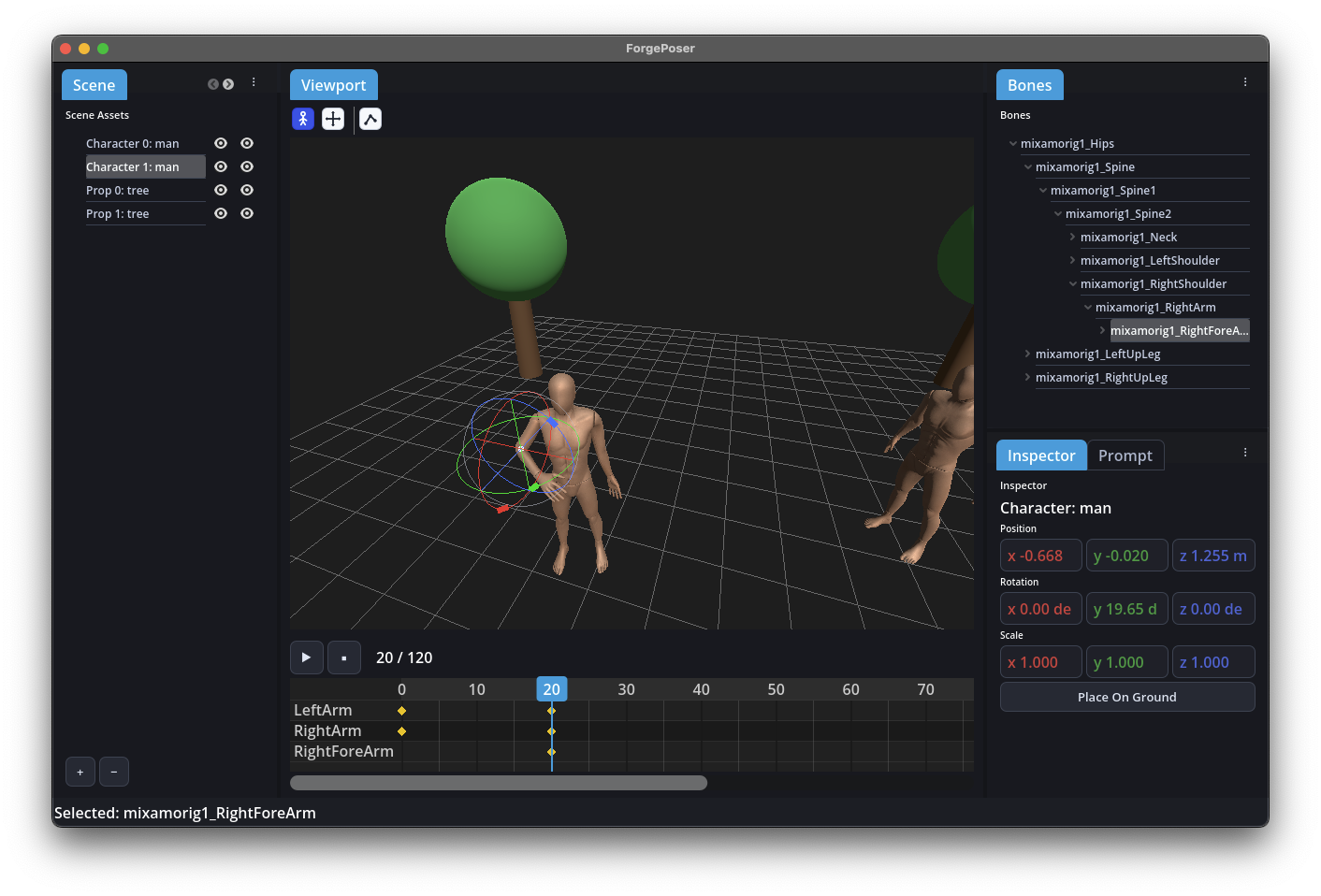 How I Built a 4D Application Platform in 28 Days with an AI Team
Source: Dev.to AI
How I Built a 4D Application Platform in 28 Days with an AI Team
Source: Dev.to AI
If your current process involves a human reading a RAG output and then performing a task in another software (like Jira, Salesforce, or a custom ERP), that is your prime candidate for an Agentic Workflow.
Step 2: Designing the Reasoning Loop (The ReAct Pattern)
An agent needs a brain that can plan. The "Reason + Act" (ReAct) pattern allows the agent to think about what it needs to do, take an action, observe the result, and repeat.
Instead of a single prompt, you are building a loop.
# Conceptual Agentic Loop in FastAPI
from fastapi import FastAPI, WebSocket

app = FastAPI()

@app.websocket("/ws/agent")
async def agent_socket(websocket: WebSocket):
    await websocket.accept()
    while True:
        data = await websocket.receive_text()
        # Logic: Think -> Act -> Observe
        plan = await agent_brain.plan(data)
        await websocket.send_text(f"Thinking: {plan}")

        result = await tool_executor.run(plan.action)
        await websocket.send_text(f"Action Result: {result}")
Step 3: Integrating Real-Time Feedback with WebSockets
One of the biggest challenges in 2026 is "Agent Anxiety"—the fear that an autonomous system is doing something wrong in the background. To solve this, we use WebSockets for real-time streaming of the agent's thought process.
As highlighted in recent FreeCodeCamp tutorials, WebSockets allow the server to push updates to the UI the moment they happen. This means the business owner can see the agent "searching the database," then "calculating the risk," then "preparing the email" in real-time, providing an essential layer of transparency.
Step 4: Scaling with AI-Assisted Development
Building these complex systems used to take months. However, as demonstrated by the recent development of the Forge 4D platform (which migrated 41,000 lines of code in under a month), we now use AI teams to build AI systems.
At Ailigent, we utilize specialized coding agents to generate the boilerplate for your FastAPI connectors and WebSocket handlers. This reduces development time by 70%, allowing a prototype to move to production in weeks rather than quarters.
Step 5: Implementing Guardrails and Human-in-the-Loop
An agentic workflow must have boundaries. In 2026, we implement "Interrupt Points." For example, if an agent decides to spend more than $500 on an automated ad buy, the workflow pauses and sends a WebSocket notification to a human dashboard for approval.
Troubleshooting Common Issues
- Infinite Loops: Sometimes agents get stuck in a reasoning loop. Solution: Implement a
max_iterationscounter (usually 5-10) to force a graceful failure or human intervention. - Latency: Agentic reasoning takes longer than a simple search. Solution: Use asynchronous programming in Python and keep the user engaged via real-time WebSocket status updates.
- Tool Inaccuracy: The agent might hallucinate how to use an API. Solution: Provide strict Pydantic schemas for every tool the agent is allowed to use.
Key Takeaways
- From Passive to Proactive: RAG is a library; Agentic AI is an employee. Transitioning means moving from "answering" to "executing."
- Transparency is Critical: Use WebSockets to provide a window into the AI's reasoning process, reducing the "black box" effect and building trust with stakeholders.
- Speed is the New Moat: Leveraging AI-assisted development (as seen in the 4D platform examples) allows companies like Ailigent to deploy complex autonomous systems in record time.
- Human-in-the-Loop: Never automate high-stakes decisions without a verification step. Use interrupts to keep humans in control of the final outcome.
Bottom Line
In 2026, the competitive advantage belongs to those who don't just have the best data, but the most capable agents acting on that data. Start by identifying one manual task your team does daily after reading a report, and turn that into your first agentic workflow today.
Related Videos
What is RAG ? #codebasics #data #datascience #ai #dataanalyst
Channel: codebasics
FastAPI in 30 seconds #python #programming #softwareengineer
Channel: Code In a Jiffy