Navigating the 2026 AI Frontier: From Context Orchestration to Scalable Ecosystems

Navigating the 2026 AI Frontier: From Context Orchestration to Scalable Ecosystems
Welcome to January 2026. If 2025 was the year of the "Agentic Explosion," then 2026 is shaping up to be the year of Precision Orchestration. For business owners and tech professionals alike, the novelty of AI has worn off, replaced by a rigorous demand for reliability, scalability, and efficiency.
 Illustration
Source: Dev.to AI
Illustration
Source: Dev.to AI
In this post, we’ll analyze three pivotal shifts happening right now: the evolution of Model Context Protocols (MCP), the rise of AI-native application architectures, and the vital role of cloud community ecosystems like AWS in 2026.
1. Solving the 'Sensory Overload' of AI Agents
One of the biggest challenges we faced leading into 2026 was the "fog of war" that LLMs experience when given too much power. The Model Context Protocol (MCP) was designed to give AI agents a standardized way to interact with tools and data. However, as many developers discovered, simply connecting an LLM to every tool in the shed often leads to "sensory overload." The model gets bogged down by too much context, leading to hallucinations or inefficient code.
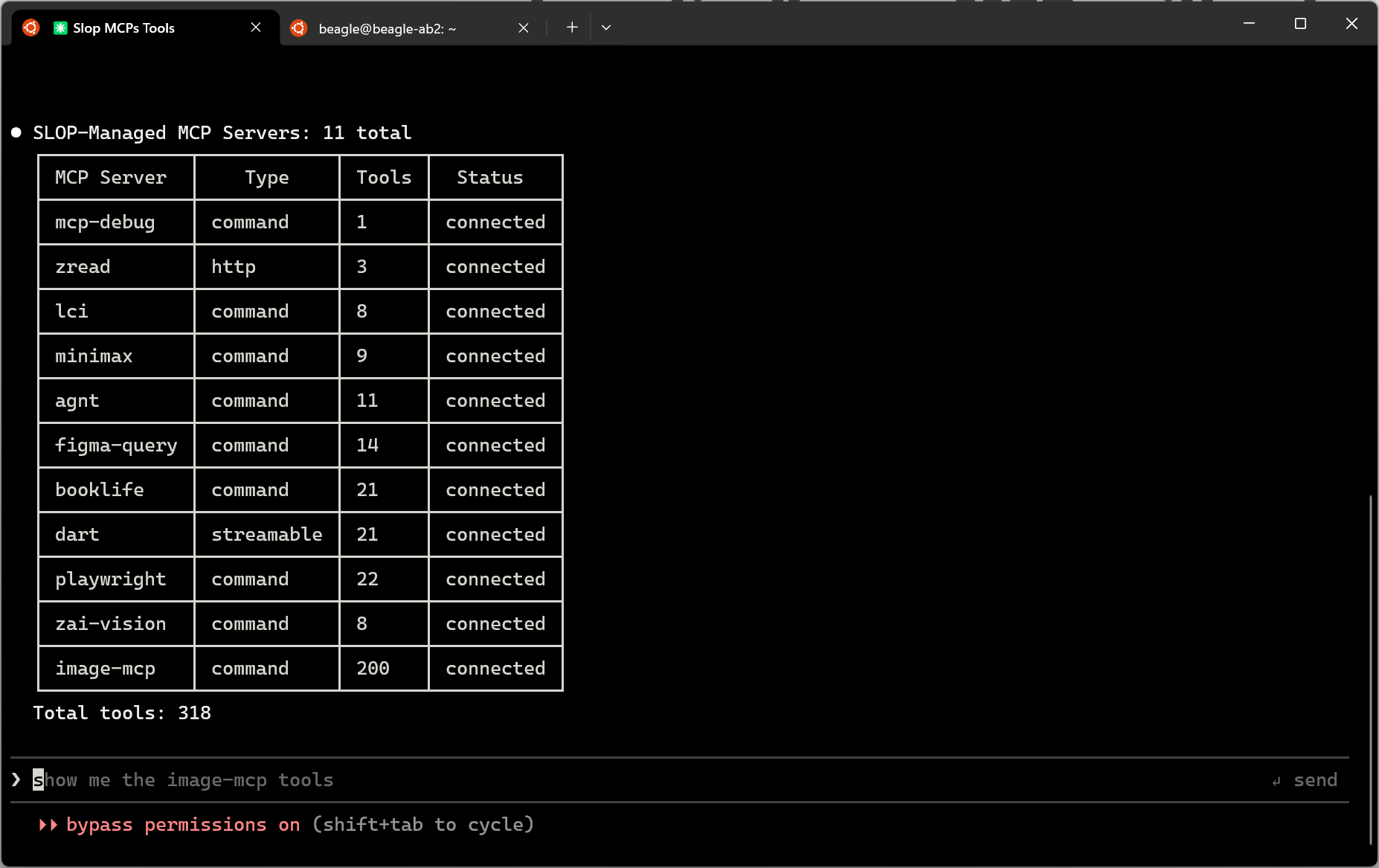
The Breakthrough: SLOP (Simple Language for Orchestrating Prompts)
Recent innovations, such as the creation of specialized orchestration languages like SLOP, show us that less is more. Instead of making the LLM write complex integration code from scratch, we are now using intermediary "languages" to filter and direct context.
Business Value: For business owners, this means faster deployment of internal AI tools. You no longer need to spend months on custom middleware; by using simplified orchestration layers, your AI agents can execute tasks with 90% higher accuracy because they aren't "confused" by irrelevant data.
2. The AI-Native Architecture: Lessons from BlogApp
 Illustration
Source: Dev.to AI
Illustration
Source: Dev.to AI
In 2026, we are seeing a fundamental shift in how applications are built. The days of "bolting on" a chatbot to a website are over. Modern platforms, like the recently showcased BlogApp, demonstrate what a scalable, AI-enhanced architecture looks like today.
Key features that are now industry standards in 2026 include:
- AI-Enhanced Content Tools: Real-time smart suggestions and automated SEO optimization integrated directly into the CMS.
- Server-Side Rendering (SSR) + AI: Balancing the heavy compute needs of AI with the speed of modern web frameworks to ensure a seamless user experience.
- Scalable Backend Design: Using microservices that can handle the erratic load patterns of agentic workflows.
Takeaway for Professionals: If your current tech stack isn't built to handle dynamic AI interactions at scale, 2026 is the year to refactor. Scalability is no longer just about user traffic; it’s about "AI traffic"—the background processes and API calls that power your intelligent features.
3. The Human Element: AWS Community Builders 2026
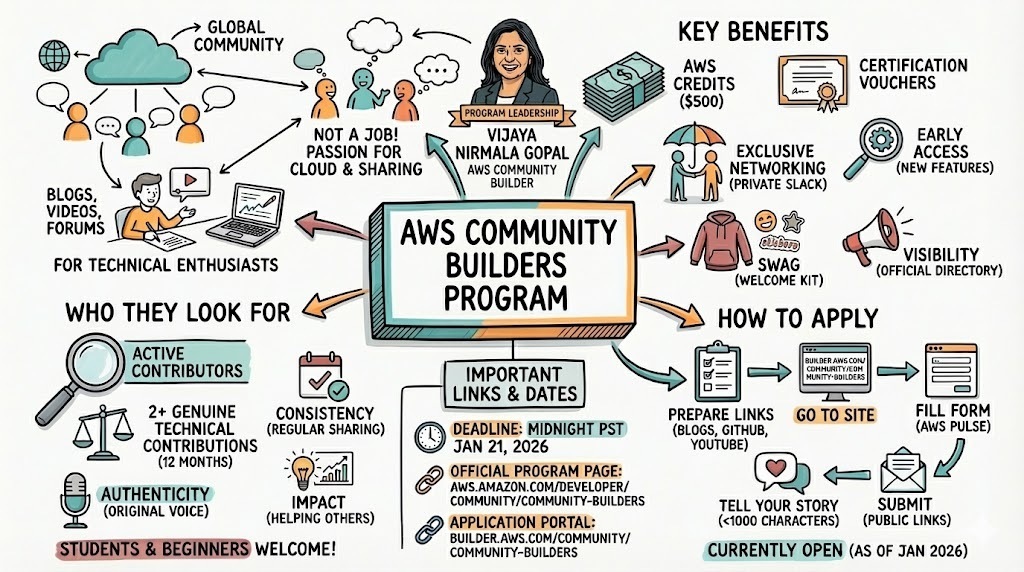
As automation takes over more of the heavy lifting, the value of specialized human knowledge has skyrocketed. The opening of the AWS Community Builders 2026 applications serves as a reminder that staying at the forefront of cloud technology is a collaborative effort.
AWS remains the backbone of the AI revolution this year, providing the underlying infrastructure for the most advanced LLMs. Being part of such communities isn't just about networking; it’s about gaining early access to the services that will define the rest of 2026, from Bedrock enhancements to new SageMaker capabilities.
Actionable Insights for 2026
How can you apply these trends to your business or career today, January 11, 2026?
- Audit Your AI Context: If you are using agentic workflows, review how much data you are feeding them. Implement a filtering layer (like a custom MCP bridge) to ensure the AI only sees what it needs to solve the specific task at hand.
- Transition to AI-Native Platforms: Evaluate your current internal tools. If they aren't providing smart suggestions or automated data processing, look into frameworks like the BlogApp model that prioritize AI-assisted productivity.
- Invest in Cloud Literacy: Whether you are a CEO or a Senior Dev, understanding the 2026 AWS landscape is non-negotiable. The integration between cloud infrastructure and AI models is tighter than ever.
- Embrace "Small" Languages: Don't always reach for Python or TypeScript for orchestration. Sometimes a domain-specific, simplified language (like SLOP) can reduce latency and cost while improving output quality.
Conclusion
The start of 2026 marks a transition from experimentation to refinement. By focusing on context management, AI-native architecture, and community-driven cloud expertise, you can ensure that your technology isn't just powerful, but also practical and profitable.
Stay tuned to this blog as we continue to track the most impactful automation trends of 2026. The year is just beginning, and the opportunities for those who can master AI orchestration are limitless.
Related Videos
Amazon Bedrock AgentCore: Deploy & Operate AI Agents in Minutes | Amazon Web Services
Channel: Amazon Web Services
What is Agentic AI and How Does it Work?
Channel: codebasics