Scaling AI Intelligence: A 2026 Masterclass on Migrating Workflows and Choosing the Right Models

By Abo-Elmakarem Shohoud | Ailigent
As we navigate the final quarter of 2026, the artificial intelligence landscape has shifted from experimental pilots to core infrastructure requirements. For business owners and tech leaders, the challenge is no longer just 'using AI,' but scaling it across entire portfolios while maintaining defensibility and cost-efficiency.
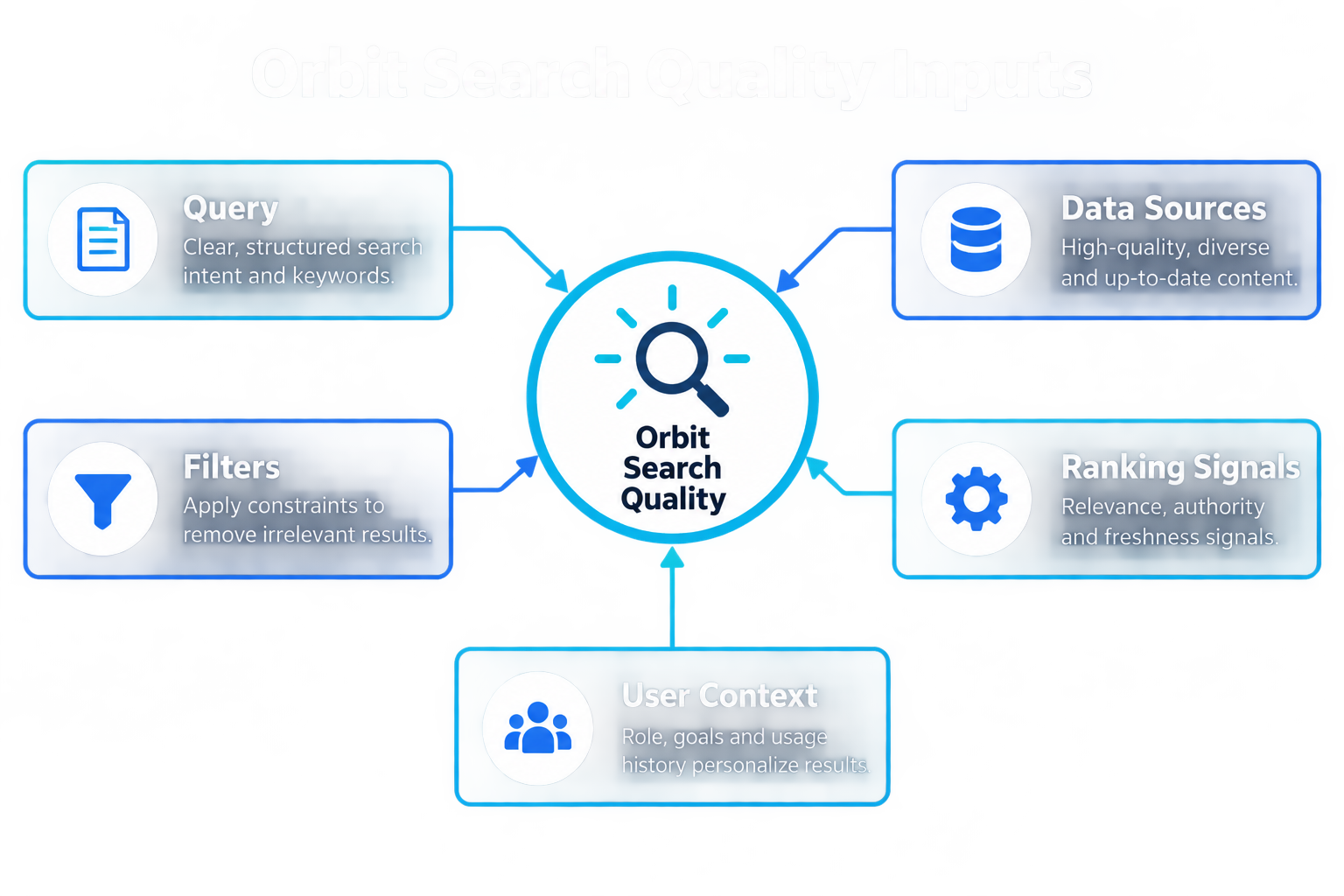 Orbit Search at Portfolio Scale: 2026 Buyer's Guide
Source: Dev.to AI
Orbit Search at Portfolio Scale: 2026 Buyer's Guide
Source: Dev.to AI
In this tutorial, we will explore how to modernize your enterprise intelligence stack. We will cover the incremental migration of legacy monoliths, the critical decision between ChatGPT and DeepSeek in the 2026 market, and how to implement Orbit Search logic at a portfolio scale.
Learning Objectives
By the end of this guide, you will be able to:
- Deconstruct a legacy monolith into an AI-ready micro-service architecture without system downtime.
- Evaluate the performance-to-cost ratio of ChatGPT vs. DeepSeek for your specific 2026 business needs.
- Implement Orbit Search strategies to reduce time-to-defensible-output in IP and patent operations.
- Design an automation roadmap that satisfies both technical leads and legal counsel.
Phase 1: The Incremental Migration Strategy
Moving from a legacy system to an AI-driven environment is often viewed as a 'big bang' event—a mistake that leads to catastrophic failures. In 2026, the most successful firms use incremental migration.
Incremental Migration is a strategy where legacy software components are replaced or augmented by modern services one piece at a time, ensuring continuous operation.
At Ailigent, we recommend the 'Strangler Fig' pattern. Instead of rewriting your entire database or search engine, you wrap the legacy system in an AI-mediator layer. This layer intercepts requests and routes them to new AI modules while the old system continues to handle legacy tasks. This approach ensures that if a new AI module fails, the system defaults to the original logic, maintaining 99.9% uptime.
Step-by-Step Walkthrough:
- Identify the 'Gravity' Points: Determine which part of your monolith consumes the most manual labor. Usually, this is data retrieval or report generation.
- Create the Proxy Layer: Implement an API gateway that handles traffic between the user and the legacy system.
- Deploy the First AI Module: Start with a non-critical task, such as automated tagging or metadata extraction using a model like DeepSeek.
- Validate and Cut Over: Once the AI module outperforms the legacy logic, redirect all traffic for that specific feature to the new module.
 ChatGPT vs DeepSeek: Which Is Better in 2026?
Source: Dev.to AI
ChatGPT vs DeepSeek: Which Is Better in 2026?
Source: Dev.to AI
Phase 2: Choosing Your Engine—ChatGPT vs. DeepSeek (2026 Edition)
In 2026, the AI market has bifurcated. On one hand, we have the 'Full-Service Ecosystem' led by ChatGPT (OpenAI); on the other, the 'High-Performance Open-Source' model led by DeepSeek.
| Feature | ChatGPT (2026) | DeepSeek (2026) |
|---|---|---|
| Best Use Case | Enterprise orchestration, complex reasoning | Coding, math, local hosting, cost-saving |
| Ecosystem | Integrated with 10,000+ business apps | Standalone, API-first, developer-centric |
| Privacy | Managed enterprise cloud | Highly customizable for on-premise |
| Cost (per 1M tokens) | $5.00 (Standard) | $0.80 (High-Efficiency) |
DeepSeek is an open-source-inspired AI model family that prioritizes computational efficiency and specialized performance in logic-heavy tasks over general-purpose chat features.
For most automation workflows managed by Abo-Elmakarem Shohoud, we suggest a hybrid approach. Use ChatGPT for client-facing communication and complex project management, while utilizing DeepSeek's API for heavy data processing and backend automation. This 'Model-Mixing' strategy can reduce operational costs by up to 60% without sacrificing output quality.
Phase 3: Scaling with Orbit Search Logic
When dealing with portfolio-scale data—especially in intellectual property (IP) or legal tech—raw data volume is your enemy. The 2026 Buyer's Guide for Orbit Search highlights a critical shift: the goal is no longer 'more results,' but 'defensible results.'
Orbit Search is a specialized IP retrieval methodology designed to prioritize defensible legal output over raw data volume.
To implement this at scale, you must move away from keyword-based search and toward semantic vector search combined with agentic verification.
The 2026 Orbit Workflow:
- Query Expansion: Use an LLM to expand a single patent claim into 50 related technical concepts.
- Vector Retrieval: Search your private vector database for high-similarity matches.
- Agentic Filtering: Deploy a 'Critic Agent' (using ChatGPT or DeepSeek) to review the top 500 results. The agent must provide a 1-sentence justification for why each result is relevant.
- Defensibility Audit: Generate a report that shows the 'Reasoning Chain' for every selected result. This is what counsel needs during litigation.
Phase 4: Practical Exercise—The Automation Audit
To apply these concepts, try this 15-minute exercise for your business:
- List your 'Time Sinks': Identify three tasks that take more than 2 hours of manual work per day.
- Select the Model: For each task, decide: Does it need the polished ecosystem of ChatGPT or the raw efficiency of DeepSeek?
- Map the Migration: If you were to replace this task with an AI agent, what is the single 'Proxy Point' where the data enters your system?
Key Takeaways
- Prioritize Defensibility: In 2026, 10,000 search results are useless if you can't defend the logic behind the top 10. Use Orbit Search principles to focus on quality.
- Incremental is Safer: Avoid 'Big Bang' rewrites. Use the Strangler Fig pattern to migrate legacy systems to AI-native architectures piece by piece.
- Optimize Model Spend: Don't use a 'prestige' model like ChatGPT for every task. DeepSeek offers superior math and coding efficiency at a fraction of the cost for backend operations.
- The Ailigent Edge: By integrating these technologies, Abo-Elmakarem Shohoud helps firms move from data-heavy to insight-driven operations.
Next Steps
To further your learning, explore the documentation for Agentic Frameworks and look into RAG (Retrieval-Augmented Generation) optimization techniques specific to the 2026 model updates. Your goal for the next quarter should be to move at least one core legacy function into a micro-service handled by a specialized AI agent.