Speculative Decoding: The 2026 Breakthrough for Local AI Efficiency and Global Safety

By Abo-Elmakarem Shohoud | Ailigent
As we navigate the final quarter of 2026, the artificial intelligence landscape is witnessing a dual evolution: the push for unprecedented speed through local hardware and the urgent call for global safety regulations. For business owners and tech professionals, staying ahead means understanding not just the software, but the underlying mechanisms that drive efficiency and the geopolitical factors that govern access. Today, the conversation is dominated by the rise of Speculative Decoding, the massive Anthropic IPO, and the high-stakes proposal for a US-China AI Treaty.
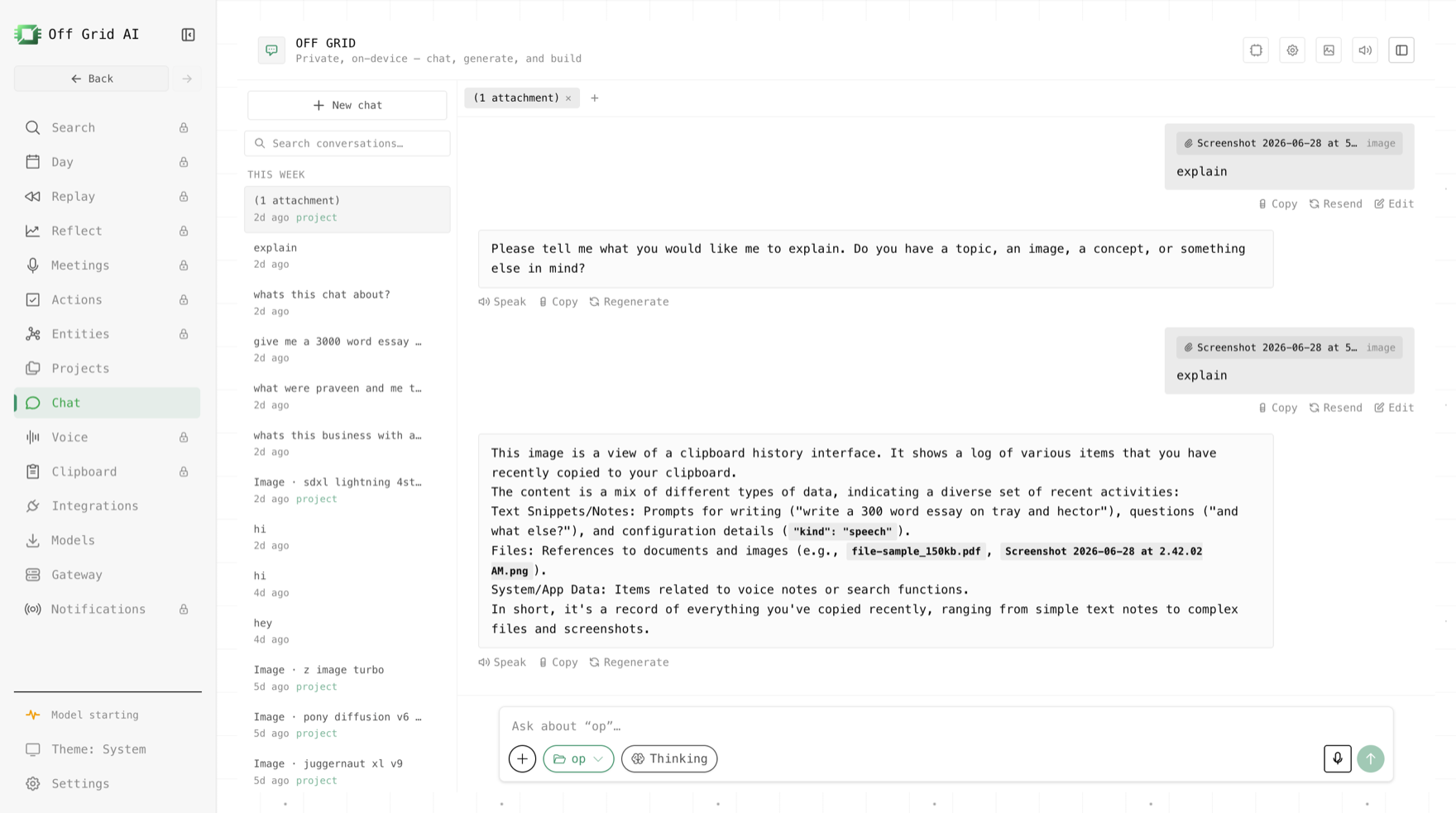 How to Test Faster Local AI Replies With Speculative Decoding in Off Grid AI in 2026
Source: Dev.to AI
How to Test Faster Local AI Replies With Speculative Decoding in Off Grid AI in 2026
Source: Dev.to AI
The Need for Speed: Why Speculative Decoding is the 2026 Standard
Waiting for a local AI to respond can be the primary bottleneck in a professional workflow. Whether you are using AI for real-time coding assistance or automated customer support, latency kills productivity. This is where Speculative Decoding enters the frame as a game-changer for local deployments.
Speculative Decoding is an optimization technique where a smaller, faster model (or N-gram sequence) predicts upcoming tokens, which are then verified by a larger model in parallel to accelerate generation. In 2026, tools like Off Grid AI Desktop (OGAD) have integrated this technology to allow users to run massive models on standard Mac and Windows hardware without the lag typically associated with local inference.
At Ailigent, we have observed that businesses transitioning from cloud-based APIs to local setups often struggle with the 'speed gap.' However, by utilizing N-gram speculative decoding—which requires no secondary model—users can see significant speed boosts. This is particularly vital for 'Off Grid' scenarios where privacy is paramount, but efficiency cannot be sacrificed. Abo-Elmakarem Shohoud emphasizes that local AI isn't just about security anymore; with these architectural improvements, it’s becoming about raw performance.
Anthropic’s $2 Trillion IPO and the Warning of Catastrophic Risk
While local AI focuses on efficiency, the titans of the industry are reaching financial milestones that were unthinkable a few years ago. Anthropic’s highly anticipated public debut in 2026 has set a benchmark with a projected $2 trillion valuation. However, the IPO filing is not just a celebration of growth; it is a sobering warning.
Anthropic has explicitly detailed that its development plans could "further increase the risk that our models cause harm." This mention of Catastrophic Risk—defined as a classification of potential harms where AI systems could lead to large-scale societal disruption, biological threats, or autonomous escalation of conflicts—is a mandatory disclosure that highlights the double-edged sword of current AI advancement. For tech professionals, this means that while the tools are becoming more powerful, the responsibility for ethical implementation has never been higher.
Geopolitics and the US-China AI Treaty
 Will Chinese AI companies slow down? A top House Democrat wants answers
Source: The Verge AI
Will Chinese AI companies slow down? A top House Democrat wants answers
Source: The Verge AI
The rapid advancement of AI has prompted a shift in Washington. As President Donald Trump prepares to meet with AI CEOs this week, Rep. Ro Khanna (D-CA) is championing a proactive approach: the US-China AI Treaty. The goal is to establish a framework that prevents AI from wreaking havoc globally, particularly in autonomous weaponry and infrastructure interference.
For businesses, this trend signals a future of stricter compliance. If a treaty is ratified, we can expect new standards for model training and cross-border data sharing. Navigating these regulations will require a robust internal AI policy, a service that Ailigent specializes in for modern enterprises.
Technical Comparison: Speculative Decoding Methods in 2026
To help you decide how to optimize your local AI engine, consider the following comparison of speculative methods currently available in OGAD and similar platforms:
| Feature | N-gram Speculation | Draft Model Speculation | Cloud-Based Inference |
|---|---|---|---|
| Hardware Requirement | Very Low (CPU/GPU) | Moderate (Requires VRAM for 2nd model) | None (Server-side) |
| Setup Complexity | Automatic / One-click | Requires matching draft model | API Key only |
| Typical Speedup | 1.2x - 1.5x | 2x - 3.5x | N/A (Latency dependent) |
| Privacy Level | Absolute (Local) | Absolute (Local) | Low (Data leaves premises) |
| Cost | Free (Included in OGAD) | Free (Open-source models) | Subscription / Per-token |
Implementing Local AI in Your Business Strategy
Why should a business owner care about speculative decoding or OGAD in 2026? The answer lies in the "Off Grid" movement. As cloud costs fluctuate and privacy regulations like the AI Act become more stringent, the ability to run high-performance models locally is a competitive advantage.
- Cost Predictability: Local AI eliminates per-token costs. By optimizing these models with speculative decoding, you get cloud-like speeds on your own hardware.
- IP Protection: When you use local engines, your proprietary data never touches a third-party server, mitigating the risks mentioned in the Anthropic IPO filing.
- Resilience: Off-grid capabilities ensure that your automated workflows continue even during internet outages or geopolitical service disruptions.
The Future of AI Safety and Performance
The trends of late 2026 suggest a convergence. We are moving toward a world where AI is either massive and regulated (like Anthropic’s frontier models) or lean, fast, and local (using Speculative Decoding). The move by Rep. Ro Khanna for a treaty suggests that the "Wild West" era of AI development is closing.
In the coming months, we expect to see more "Small Language Models" (SLMs) specifically designed to act as draft models for speculative decoding, further pushing the boundaries of what a standard laptop can achieve. For the automation-first professional, the message is clear: optimize your local stack now to stay resilient against the shifting tides of global regulation and corporate volatility.
Key Takeaways
- Speculative Decoding is Essential: If you are running local AI in 2026, enabling N-gram or draft model speculation is the fastest way to reduce latency without upgrading hardware.
- Regulation is Imminent: The US-China AI Treaty proposal and Anthropic’s IPO warnings indicate that safety and compliance will soon be as important as performance.
- Local is the New Cloud: Tools like Off Grid AI Desktop (OGAD) are providing the privacy and speed necessary for enterprise-grade automation without the risks of centralized AI giants.
Bottom Line: To thrive in the 2026 AI economy, businesses must balance the high-performance capabilities of local AI with an acute awareness of the evolving regulatory and ethical landscape. Ailigent remains committed to guiding you through these technological shifts.
Related Videos
How Speculative Decoding Actually Works (4x LLM Speed Hack) #masterclass
Channel: SignalCraft AI
How Speculative Decoding Makes LLMs Faster
Channel: Swetank Srivastava