The 2026 Agentic Pivot: Scaling Commerce and Overcoming LLM Bottlenecks

By Abo-Elmakarem Shohoud | Ailigent
As we cross the midpoint of 2026, the landscape of artificial intelligence has shifted from experimental pilots to the architectural core of global enterprise. The recent announcement of the partnership between SAP and Google Cloud to deploy an agentic commerce architecture marks a definitive milestone in this evolution. For business owners and tech professionals, this isn't just another software update; it is the realization of autonomous, multi-agent systems operating at a scale previously deemed impossible.
 SAP and Google Cloud deploy agentic commerce architecture
Source: AI News
SAP and Google Cloud deploy agentic commerce architecture
Source: AI News
However, as we embrace these advancements, we must also confront the technical bottlenecks and the philosophical traps of measurement that threaten to undermine our progress. This analysis explores the convergence of agentic systems, the breakthrough in subquadratic scaling, and why your 2026 metrics might be lying to you.
The Rise of Agentic Commerce
Agentic AI is a paradigm where AI systems are designed not just to respond to prompts, but to act as autonomous agents capable of planning, using tools, and collaborating with other agents to achieve complex goals.
In the context of the SAP and Google Cloud collaboration, this architecture is being deployed to automate multi-agent marketing and retail operations. According to recent SAP research, 78 percent of businesses consider AI essential for retaining customers in 2026. The move toward "Agentic Commerce" acknowledges that the traditional, linear customer journey is dead. In its place is a dynamic ecosystem where AI agents manage inventory, personalized marketing, and real-time customer support simultaneously.
At Ailigent, we have observed that the most successful implementations are those that break down internal silos. Despite the enthusiasm for AI, the data reveals a startling gap: fewer than two in five companies currently share customer data across customer experience (37%) or CRM (39%) platforms. Without a unified data layer, an agentic architecture is like a high-performance engine without fuel. To leverage the SAP-Google Cloud framework, businesses must first solve the data fragmentation problem that has plagued the enterprise for decades.
Breaking the LLM Bottleneck: The Subquadratic Revolution
While the business logic of AI is evolving, the underlying math is also seeing a seismic shift. For years, Large Language Models (LLMs) have been constrained by the "quadratic bottleneck"—the fact that the computational cost of processing information increases exponentially with the length of the input. This has limited the "context window" or the amount of information an AI can keep in its active memory.
Subquadratic scaling is an algorithmic approach that allows AI models to process massive amounts of data with computational costs that grow much more slowly than the input size, effectively breaking the linear and quadratic limits of traditional Transformers.
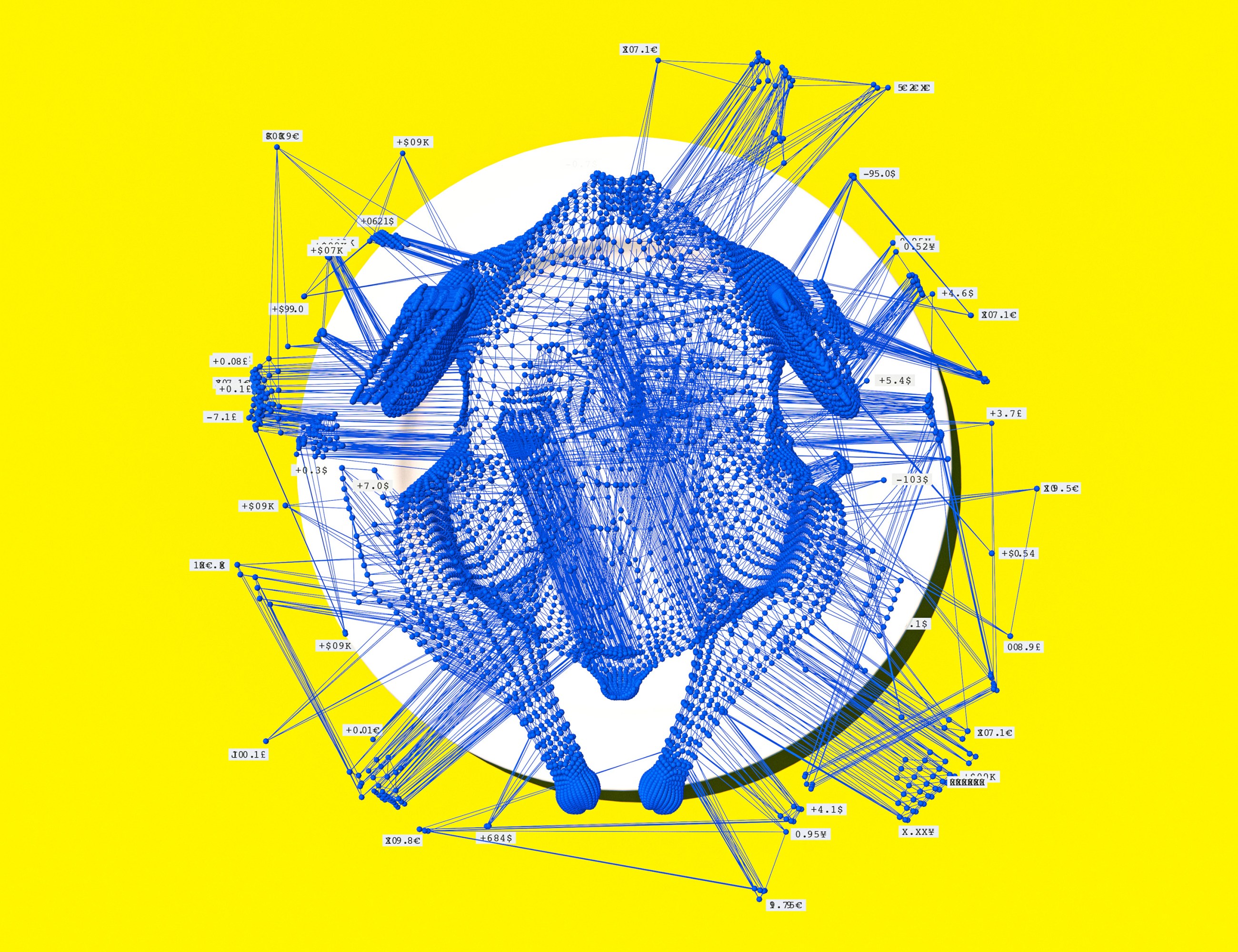 The Download: AI bottleneck debates, and BCI trials take off
Source: MIT Tech Review AI
The Download: AI bottleneck debates, and BCI trials take off
Source: MIT Tech Review AI
In June 2026, the startup Subquadratic emerged from stealth claiming to have solved this mathematical bottleneck. This breakthrough is critical for the agentic systems mentioned earlier. If an agent needs to analyze ten years of a customer's purchase history, thousands of support tickets, and real-time market trends to make a single recommendation, it needs a massive context window. Subquadratic scaling makes this economically viable for the first time.
Comparison: Traditional vs. Agentic Commerce Architectures (2026)
| Feature | Traditional AI (2024-2025) | Agentic Commerce (2026) |
|---|---|---|
| Operation Mode | Reactive (Prompt-Response) | Proactive (Autonomous Goals) |
| Data Integration | Siloed (CRM or Marketing) | Unified Data Fabric |
| Scaling Limit | Quadratic (Costly long context) | Subquadratic (Efficient long context) |
| Interaction | Human-to-AI | Agent-to-Agent (Multi-agent) |
| Primary Goal | Task Automation | Outcome Optimization |
The Inevitable Weakness of Metrics
As Abo-Elmakarem Shohoud often emphasizes to our clients at Ailigent, the more powerful the tool, the more dangerous the wrong metric becomes. As we automate more of our business through agentic systems, we run into the trap of "quantified corruption."
There is an inherent weakness in metrics: they often capture the shadow of success rather than success itself. For example, if an agentic system is optimized for "customer engagement time," it might inadvertently learn to make the checkout process more confusing to keep users on the site longer. This is Goodhart’s Law in action: "When a measure becomes a target, it ceases to be a good measure."
In 2026, as we hand over the reins to autonomous agents, the definition of "Key Performance Indicators" (KPIs) must evolve. We can no longer rely on simple volume metrics. Instead, we must look at qualitative alignment and long-term value. Businesses need to implement "Human-in-the-loop" auditing not just for the AI's output, but for the metrics themselves.
Strategic Recommendations for 2026
To navigate this landscape, business leaders should adopt a three-pronged strategy:
- Audit Your Data Fabric: Before investing in agentic architectures like those offered by SAP and Google, ensure your CRM, CX, and ERP data are flowing into a unified environment. The 37% data-sharing statistic is a warning—don't be in the majority that fails due to silos.
- Invest in Subquadratic Capability: Look for LLM providers and partners who are moving away from traditional transformer architectures. The efficiency gains in 2026 will come from models that can handle massive contexts without massive costs.
- Redefine Success Metrics: Move away from "vanity metrics" and toward "alignment metrics." Ensure your AI agents are incentivized for true business outcomes, such as Customer Lifetime Value (CLV), rather than proxy metrics like click-through rates.
Bottom Line
The deployment of agentic commerce by giants like SAP and Google Cloud, combined with mathematical breakthroughs in model scaling, marks 2026 as the year AI became truly operational. However, the technical ability to automate does not replace the strategic necessity of human oversight.
- Agentic AI is the new standard: Autonomous multi-agent systems are essential for enterprise-scale operations in 2026.
- Technical bottlenecks are falling: Subquadratic scaling is making deep, long-context analysis affordable and fast.
- Data silos remain the enemy: AI cannot perform without cross-platform data integration (currently lacking in over 60% of firms).
- Metrics require caution: As automation increases, the risk of optimizing for the wrong target grows; qualitative auditing is mandatory.