The 2026 AI Pivot: Why Humanoids Are Losing Heads and Apple is Gaining Eyes

By Abo-Elmakarem Shohoud | Ailigent
As we navigate the bustling tech landscape of June 2026, a clear pattern is emerging: the era of "AI for show" is officially over. We have entered the era of "AI for utility." This week, three major stories broke that, while seemingly unrelated, point toward a unified future where intelligence is embedded into the very fabric of our physical and virtual environments. From the radical redesign of humanoid robots to a high-stakes war in the virtualization market, the message for business owners is clear—adapt your infrastructure or be left behind.
 The next humanoid robot might not look human at all
Source: The Verge AI
The next humanoid robot might not look human at all
Source: The Verge AI
The Death of the Humanoid Aesthetic: Function Over Form
For years, the tech world was obsessed with making robots that looked like us. We wanted two legs, two arms, and a friendly face. However, as of 2026, the industry is realizing that the human form is often a liability in industrial settings. Genesis AI recently unveiled "Eno," a robot that challenges every preconceived notion of what a "humanoid" should be. Eno doesn't have a head. It doesn't have legs. Instead, it sits on a wheeled base and can fold down like a deck chair.
Embodied AI is a field of artificial intelligence that focuses on creating intelligent agents that interact with the physical world through a physical body.
According to Genesis AI, "humanoid robots don't need to look human." This is a profound shift. By removing the need for complex bipedal balance—one of the most computationally expensive tasks in robotics—engineers can dedicate more processing power to the AI’s task-specific intelligence. For businesses in logistics and manufacturing, this means robots that are cheaper, more stable, and easier to maintain.
In 2026, the cost of a bipedal humanoid still hovers around $150,000, while modular, wheeled units like Eno are entering the market at a fraction of that price. As Abo-Elmakarem Shohoud often emphasizes at Ailigent, the goal of automation is not to replace the human image, but to augment human productivity. The move toward non-humanoid form factors is a direct response to the need for ROI in the warehouse and on the factory floor.
Comparison: Bipedal vs. Functional Robotics (2026 Market Data)
| Feature | Traditional Bipedal Humanoid | Functional/Modular (e.g., Eno) |
|---|---|---|
| Primary Movement | Two-legged walking | Wheeled or Tread-based |
| Complexity | High (Requires constant balance) | Moderate (Inherently stable) |
| Deployment Time | 6-12 Months | 2-4 Weeks |
| Est. Cost (2026) | $150,000+ | $45,000 - $70,000 |
| Battery Life | 2-4 Hours | 8-12 Hours |
The Virtualization War: HPE’s Aggressive Play Against VMware
While robots are changing on the factory floor, the digital foundations of our businesses are undergoing an equally violent shift. HPE (Hewlett Packard Enterprise) has just announced a year of free VM Essentials software, a direct shot across the bow of Broadcom-owned VMware.
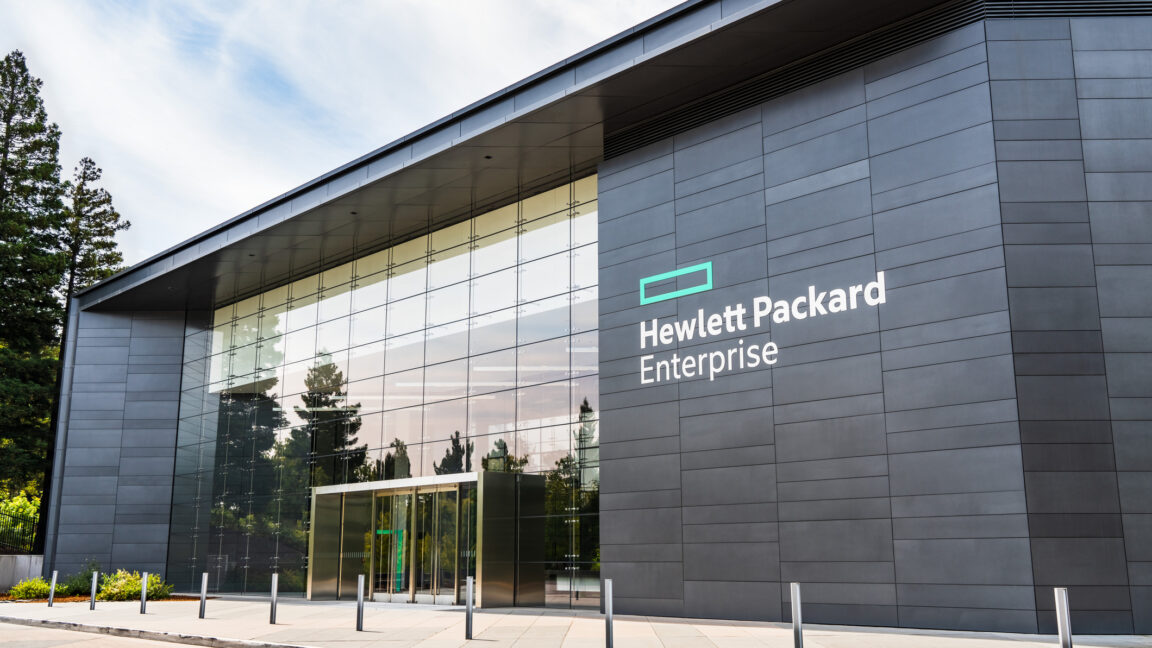 Year of free HPE software a “step in the correct direction” in VMware rivalry
Source: Ars Technica AI
Year of free HPE software a “step in the correct direction” in VMware rivalry
Source: Ars Technica AI
Virtualization is a technology that allows you to create multiple simulated environments or dedicated resources from a single, physical hardware system.
Since the Broadcom acquisition in late 2023 and the subsequent licensing changes throughout 2024 and 2025, many enterprises have felt squeezed by rising costs. In 2026, the market is finally seeing a mass migration. HPE's move to offer free licenses for a year is a classic "land and expand" strategy. Partners are already telling industry analysts that this is a "step in the correct direction," though some argue that even more aggressive free tiers are needed to fully break VMware's historical dominance.
For the tech professional, this means 2026 is the year of the "Hypervisor Pivot." If your business is still locked into legacy licensing models that saw 300% price hikes over the last two years, now is the time to evaluate HPE's Nutanix-integrated solutions or open-source alternatives. The business impact is simple: reducing overhead on the virtualization layer frees up capital for the much more expensive GPU clusters required for local AI model training.
Apple’s 2027 Roadmap: The AI We Wear
Looking slightly ahead, new reports from Mark Gurman have detailed Apple's plans for late 2027, specifically regarding AirPods equipped with cameras. While we are currently enjoying the AI-powered features released at WWDC 2026, the next frontier is visual perception.
Edge AI is the deployment of AI algorithms directly on local devices, such as smartphones or IoT sensors, rather than relying solely on cloud-based servers.
Imagine a world where your AirPods don't just hear your surroundings but see them. This isn't about taking photos; it's about providing the AI with a constant stream of visual data to understand context. For a business owner, this could mean real-time translation of physical documents, hands-free inventory counting, or safety alerts in hazardous environments.
Apple is also reportedly working on a second-generation folding iPhone for 2027. This suggests that by next year, the "foldable" era will have matured enough for enterprise-grade reliability. At Ailigent, we see this as a move toward "Spatial Productivity," where the device adapts its form factor to the intensity of the task at hand.
Strategic Synthesis: What This Means for Your Business
The convergence of these three trends—functional robotics, affordable virtualization, and wearable AI perception—paints a picture of a highly efficient 2026. We are moving away from centralized, expensive, and "pretty" tech toward decentralized, affordable, and "smart" tech.
As Abo-Elmakarem Shohoud has noted in recent consulting sessions, the businesses that will thrive in the latter half of this decade are those that treat AI as a plumbing problem, not a trophy. You don't need a robot that looks like a person to move boxes; you need a robot that doesn't fall over. You don't need the most expensive virtualization software; you need the one that scales with your AI needs. You don't need a faster phone; you need a phone that understands what you are looking at.
Key Takeaways for Business Leaders
- Prioritize Utility in Robotics: If you are looking at automation for 2026-2027, ignore the "cool factor" of bipedal robots. Focus on wheeled, modular units like Eno that offer 3x the battery life and 50% lower maintenance costs.
- Audit Your Virtualization Costs: With HPE offering aggressive incentives to leave VMware, perform a cost-benefit analysis of your current stack. A year of free software could provide the budget needed to upgrade your AI hardware infrastructure.
- Prepare for Multimodal Input: Apple’s move toward camera-equipped wearables suggests that the next generation of business apps will rely on visual context. Start thinking about how your internal workflows could be improved if your employees had "AI eyes."
- Stay Agile with Ailigent: The pace of change in 2026 is unprecedented. Partnering with experts like Abo-Elmakarem Shohoud ensures that your automation strategy is based on functional ROI rather than market hype.
Bottom Line
The "humanoid" dream is evolving into a functional reality, infrastructure is becoming a battleground for affordability, and our devices are gaining new senses. In June 2026, the most successful businesses are those that are streamlining their digital foundations to make room for the physical manifestation of AI. Whether it’s a headless robot in your warehouse or a camera in your ear, the future of work is being redesigned for efficiency, not ego.