The 2026 AI Strategy: Navigating High Energy Demands, Private Infrastructure, and the Ethics of Generative Media

The State of AI in 2026: A New Frontier of Efficiency and Responsibility
Welcome to January 2026. If 2024 and 2025 were the years of viral chatbots and massive LLM hype, 2026 is the year of sober implementation. Business leaders have moved past asking "What can AI do?" and are now asking "How can we run this sustainably, privately, and ethically at scale?"
 Illustration
Source: Dev.to AI
Illustration
Source: Dev.to AI
Recent shifts in the industry—from the energy crisis facing data centers to the increasing need for medical-grade data privacy—suggest that the "wild west" era of AI is coming to an end. For Abo-Elmakarem Shohoud's readers, staying ahead means understanding three critical pillars: Infrastructure, Privacy, and Safety.
1. The Energy Pivot: Nuclear Power Meets the Data Center
As of early 2026, the data center backlash has reached a fever pitch. Traditional power grids in tech hubs are struggling to keep up with the exponential demand for GPU clusters. According to recent reports from MIT Tech Review, the industry is looking toward a 20th-century solution for a 21st-century problem: Next-Generation Nuclear Reactors.
We are seeing a surge in investment for Small Modular Reactors (SMRs). For businesses, this means that "Green AI" is no longer a PR stunt; it’s a prerequisite for license-to-operate.
Business Insight: If you are planning large-scale AI deployments this year, your choice of cloud provider should be dictated by their energy resilience. Providers investing in sovereign energy sources (like on-site nuclear or advanced geothermal) will offer the most stable pricing and uptime as grid pressures increase throughout 2026.
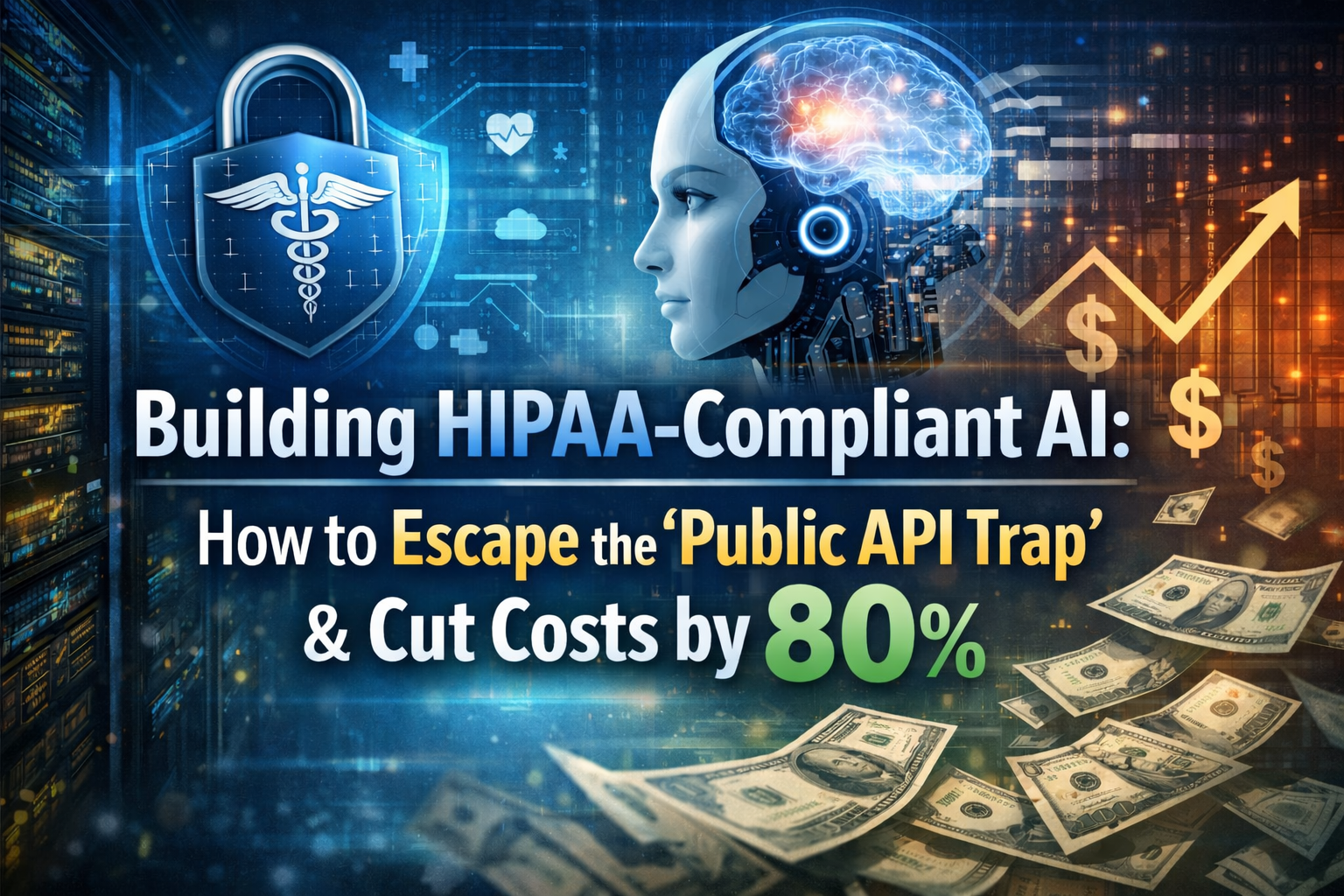
2. Escaping the 'Public API Trap': The 80% Cost Reduction
 Illustration
Source: The Verge AI
Illustration
Source: The Verge AI
For the past two years, most businesses relied on public APIs from giants like OpenAI or Anthropic. However, as we move further into 2026, the "Public API Trap" has become evident. High latency, lack of data control, and spiraling costs are forcing a migration toward private deployments.
Recent breakthroughs in HIPAA-compliant AI show that companies can reduce costs by up to 80% by moving away from general-purpose public models toward specialized, self-hosted instances.
Why Private Infrastructure is the 2026 Standard:
- Data Sovereignty: In sectors like healthcare and finance, sending data to a third-party API is increasingly viewed as a liability.
- Cost Predictability: Inference costs on private clouds or on-premise hardware (like the latest H200/B200 clusters) are now more manageable than pay-per-token models for high-volume enterprises.
- Compliance: Meeting HIPAA or GDPR standards is significantly easier when the data never leaves your virtual private cloud (VPC).
3. The Safety Crisis: Deepfakes and Guardrails
While infrastructure and privacy are technical hurdles, the social license to operate remains fragile. The recent controversy surrounding X’s (formerly Twitter) Grok AI and its struggle to prevent nonconsensual deepfakes highlights a massive gap in current safety protocols.
Despite claims of stricter censorship, the reality is that generative models are still being exploited. This isn't just a social media problem; it’s a corporate risk. If your business uses generative AI for marketing or customer interaction, a single "hallucination" or safety breach can result in permanent brand damage.
The 2026 Approach to AI Safety:
- Human-in-the-loop (HITL): Never let a generative model publish directly to the public without a human audit layer.
- Custom Safety Layers: Don't rely solely on the model's native filters. Implement secondary AI "classifiers" that scan output for policy violations before it reaches the end-user.
Actionable Takeaways for Q1 2026
- Audit Your AI Spend: If your API bills have grown 20% month-over-month, evaluate switching to a private, fine-tuned Llama 4 or equivalent open-source model hosted on your own infrastructure.
- Prioritize Privacy-First Architecture: If you handle sensitive client data, make it a 2026 goal to move toward HIPAA-compliant, private instances. The 80% cost savings are just the cherry on top of the security benefits.
- Invest in Sustainability: Ask your vendors for their 2026 Carbon Intensity reports. As regulations tighten, being on a "dirty" grid will eventually cost you in taxes and public perception.
- Redouble Safety Protocols: Re-test your AI guardrails. If a user can trick your chatbot into violating your brand guidelines, your current safety layer is insufficient.
Final Thought
2026 is about maturity. We have the tools; now we need the discipline to use them wisely. By focusing on private infrastructure and sustainable energy, your business can turn AI from a cost center into a high-margin, secure competitive advantage.
Stay tuned to Abo-Elmakarem Shohoud’s blog for more deep dives into the automation trends shaping our world.
Related Videos
Warren Buffett on ChatGPT and A.I.: It's 'extraordinary' but don't know if it's 'beneficial' #Shorts
Channel: CNBC Television
Artificial intelligence का खतरा क्यों बढ़ रहा है By VIkas Divyakirti sir | can AI replace human
Channel: UPSC IAS Guru