The 2026 Guide to Autonomous Content Systems: Training LoRAs and Scaling SEO with Agentic Workflows

By Abo-Elmakarem Shohoud | Ailigent
As we move through the midpoint of 2026, the landscape of AI automation has shifted from simple prompt-response interactions to fully autonomous agentic workflows. For business owners and tech professionals, the goal is no longer just to 'use AI,' but to build self-sustaining systems that create, refine, and publish content with minimal human oversight.
![Training a LoRA on FLUX.2 [klein] with Hermes Agent](https://dev-to-uploads.s3.amazonaws.com/uploads/articles/s685no0rj7t5s59qmwtm.jpg) Training a LoRA on FLUX.2 [klein] with Hermes Agent
Source: Dev.to AI
Training a LoRA on FLUX.2 [klein] with Hermes Agent
Source: Dev.to AI
In this guide, we will explore how to integrate the latest advancements in image generation (FLUX.2 [klein]), agentic dataset curation (Hermes Agent), and high-integrity publishing (SEO Agent) into a unified pipeline. At Ailigent, founded by Abo-Elmakarem Shohoud, we believe that the competitive edge in 2026 lies in the quality of your 'Agentic Gates'—the automated checks that ensure AI-generated output meets human standards before it ever hits the web.
Understanding the Core Technologies
Before we dive into the technical steps, let's define the foundational concepts that make this workflow possible:
- LoRA (Low-Rank Adaptation) is a modular fine-tuning technique that allows developers to inject specific styles or concepts into large base models like FLUX.2 without retraining the entire neural network.
- Agentic AI is a paradigm where AI systems are designed to pursue complex goals autonomously by planning, using tools, and iterating based on feedback rather than following a rigid script.
- FLUX.2 [klein] is the 2026 industry standard for efficient, high-fidelity image generation, optimized for consumer-grade hardware while maintaining the architectural depth of larger diffusion models.
Prerequisites
Before starting this guide, ensure you have the following:
- A Modern AI IDE: Either Cursor or Windsurf (we will compare them below).
- Python 3.12+ Environment: For running the
ai-toolkitand Hermes scripts. - API Access: Keys for an LLM provider (like Anthropic or OpenAI) to power your Hermes Agent.
- Hardware: A GPU with at least 24GB VRAM (e.g., RTX 5090 or equivalent) for local training, or a cloud instance on Lambda Labs.
Step 1: Choosing Your Development Foundation (Cursor vs. Windsurf)
To build these complex automations, your choice of IDE is critical. In 2026, the battle for the best Python-focused AI editor is between Cursor and Windsurf.
| Feature | Cursor (2026 Edition) | Windsurf (by Codeium) |
|---|---|---|
| Context Awareness | Deep codebase indexing; understands multi-file relationships natively. | Uses 'Flow' technology for real-time context syncing. |
| Agentic Capabilities | High; can execute terminal commands and fix its own bugs. | Exceptional; focuses on 'Flow-state' where the AI anticipates the next edit. |
| Python Optimization | Best-in-class linting and type-checking integration. | Strong focus on high-performance libraries (Polars, PyTorch). |
| Cost | Subscription-based ($20/mo). | Tiered pricing with a robust free 'Individual' plan. |
Actionable Insight: If you are building a system from scratch, Windsurf provides a more fluid 'flow' experience for rapid prototyping. However, for maintaining large-scale automation repositories, Cursor's indexing remains superior.
Step 2: Automating Dataset Curation with Hermes Agent
The most tedious part of training a LoRA has always been the dataset. In the past, you had to manually find images and write captions. In 2026, we use Hermes Agent to do the heavy lifting.
- Define the Concept: Tell Hermes what you want to train (e.g., "Medieval Marginalia style").
- Automated Scraping: Hermes uses browser-based tools to find high-quality, license-cleared images.
- Agentic Captioning: Instead of simple tags, Hermes uses a Vision-Language Model (VLM) to write descriptive captions that explain the lighting, texture, and composition.
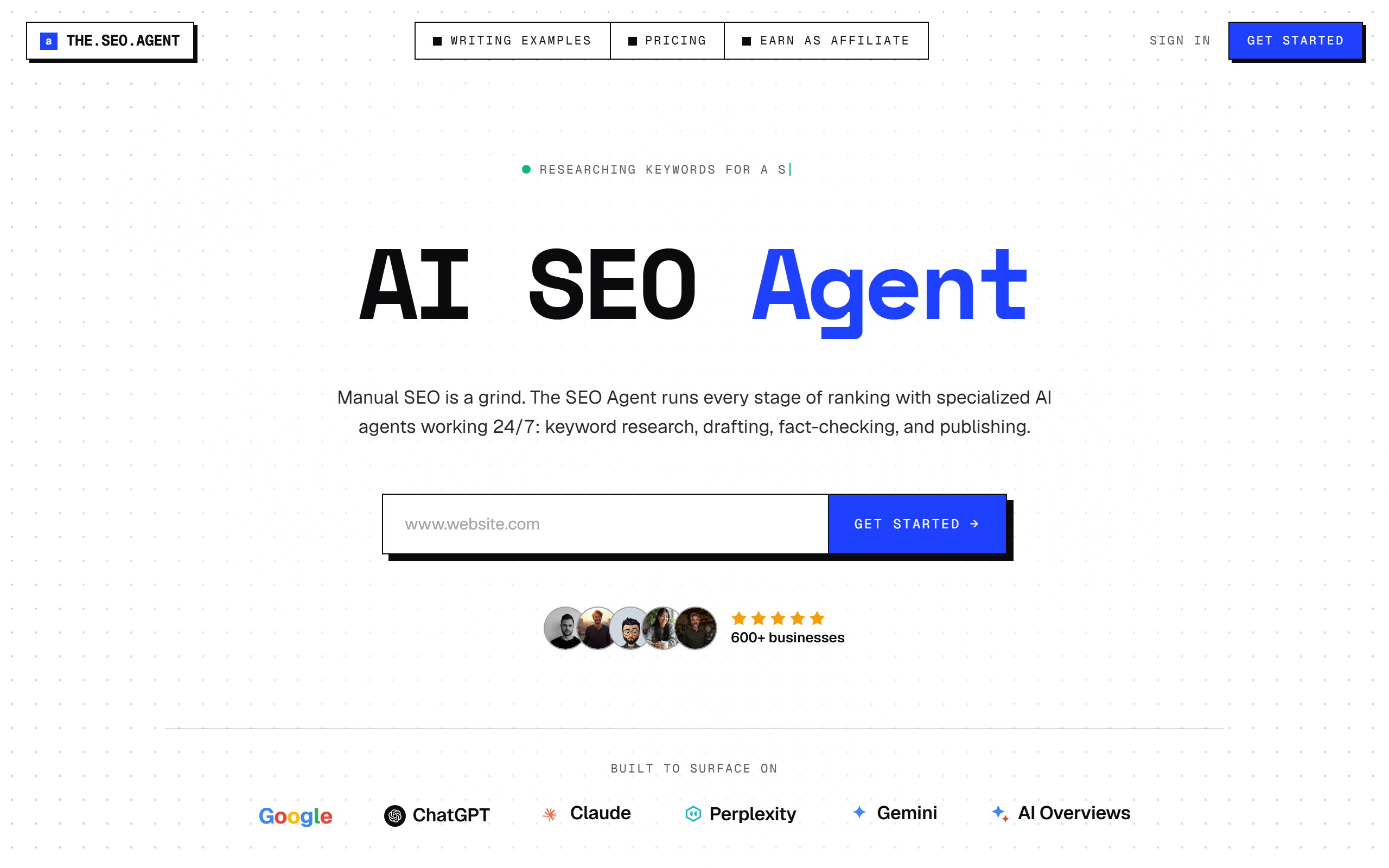 Autoblogging Tools Compared: Which Ones Actually Ship a Publishable Article?
Source: Dev.to AI
Autoblogging Tools Compared: Which Ones Actually Ship a Publishable Article?
Source: Dev.to AI
# Example Hermes Agent Configuration for Dataset Generation
from hermes_agent import DatasetGenerator

agent = DatasetGenerator(topic="medieval_marginalia", count=50)
agent.run_pipeline(license_filter="creative_commons", output_dir="./data")
Step 3: Training the FLUX.2 [klein] LoRA
Once your dataset is ready, we use the ai-toolkit to perform the training. FLUX.2 [klein] is specifically designed to be responsive to LoRAs, allowing for high-quality style transfer with as few as 20 images.
The Configuration (config.yaml):
train:
  type: "lora"
  model: "flux.2-klein"
  dataset_path: "./data"
  resolution: [1024, 1024]
  epochs: 15
  learning_rate: 0.0001
  optimizer: "AdamW8bit"
  output_name: "medieval_marginalia_v1"
Run the training via terminal:
python train.py --config config.yaml
This process should take approximately 45 minutes on a modern 2026 GPU. The result is a small .safetensors file that can generate infinite assets for your blog or marketing materials.
Step 4: Scaling SEO with Quality-Gated Autoblogging
Now that you have custom visuals, you need a system to publish them. Most 'autoblogging' tools in 2026 fail because they produce low-quality fluff that search engines penalize.
The solution is the SEO Agent Quality Gate. Unlike traditional tools, the SEO Agent runs a pre-publication audit. If the article doesn't meet specific readability, keyword density, and factual accuracy scores, it is rejected and sent back for agentic rewriting.
How to implement the Quality Gate:
- Connect your CMS: Link the SEO Agent to your WordPress or Ghost site.
- Set the Threshold: Configure a minimum 'Quality Score' (e.g., 85/100).
- Integrate Visuals: Tell the agent to pull from your newly trained LoRA for custom, unique imagery that avoids 'stock photo' penalties.
Troubleshooting Common Issues
- Training Collapse: If your LoRA output looks like noise, reduce your learning rate by half. FLUX.2 [klein] is sensitive to high rates.
- SEO Agent Rejections: If your agent keeps rejecting drafts, check your 'Persona' settings. Often, the AI is trying to be too 'salesy,' which triggers 2026's helpful content filters.
- IDE Context Loss: In Cursor or Windsurf, if the AI loses track of your project, use the
@CodebaseorFlowrefresh feature to re-index your training scripts.
Key Takeaways
- Agentic Curation is Essential: Manual dataset creation is obsolete. Use agents like Hermes to ensure your LoRAs are trained on high-quality, captioned data.
- Quality Gates Over Quantity: In 2026, Google and other search engines prioritize 'High-Integrity' content. Tools like SEO Agent that can 'refuse' to publish bad content are more valuable than those that generate thousands of posts.
- Choose the Right IDE: Your productivity is capped by your tools. Use Windsurf for rapid prototyping of AI agents and Cursor for managing complex codebases.
- Custom Visuals are SEO Gold: Using a custom-trained LoRA for your blog imagery ensures your site is unique, which is a significant ranking factor in the current AI-saturated web.
Bottom Line: By combining agentic dataset preparation, efficient LoRA training, and high-quality publishing gates, you can build a content engine that operates at a scale and quality level previously impossible. As Abo-Elmakarem Shohoud often notes, the goal of Ailigent is to help you move from being a 'content creator' to a 'system architect.'
Related Videos
Agentic RAG vs RAGs
Channel: Rakesh Gohel
Everything in Ollama is Local, Right?? #llm #localai #ollama
Channel: Matt Williams