The 2026 Pivot: Why Generative AI Advertising and Monetization are Reshaping the Business Landscape

The 2026 Pivot: Why Generative AI Advertising and Monetization are Reshaping the Business Landscape
By Abo-Elmakarem Shohoud | Ailigent
It is February 10, 2026, and we are witnessing the most significant transition in the history of the digital age. For the past few years, artificial intelligence was a novelty—a tool we marveled at for its ability to write poems or generate quirky images. But as we move deeper into 2026, the gloves are off. The industry has entered its "Commercialization Era," where monetization, safety, and mainstream media saturation are the new battlegrounds.
 Illustration
Source: Google AI Blog
Illustration
Source: Google AI Blog
From the living rooms watching the 2026 Super Bowl to the millions of users interacting with ChatGPT, the presence of AI is no longer hidden. It is being sold, sponsored, and scrutinized. For business owners and tech professionals, understanding this shift is no longer optional; it is the key to surviving the next fiscal cycle. According to Gartner, global spending on AI-powered advertising tools is projected to exceed $45 billion by end of 2026—a 62% increase from the previous year.
What Happened: The Super Bowl 2026 Reality Check
Just days ago, the 2026 Super Bowl concluded, leaving a bittersweet taste in the mouths of tech enthusiasts. While the event was oversaturated with Generative AI Advertising, the consensus is clear: the tech community failed to stick the landing. As reported by The Verge, many AI-generated spots felt uninspired or lacked the "human soul" that makes a $7 million ad spot worth it.
Generative AI advertising is the practice of using large language models, diffusion models, and other AI systems to create marketing content—from video scripts and visual assets to entire campaign strategies—at scale and speed that was previously impossible. The promise is enormous, but so are the pitfalls when the technology replaces creativity rather than augmenting it.
Out of the 15 AI-themed ads aired during the Super Bowl, only 3 received positive sentiment scores above 70% in post-game audience surveys. The remaining 12 were described as "technically impressive but emotionally hollow." This gap between technical capability and emotional resonance is the defining challenge for AI advertising in 2026.
For businesses, the lesson of February 2026 is simple: Automation without purpose is just noise. We have reached a point where seeing an AI-generated image or video is no longer impressive on its own. To gain business value, brands must move past the "wow factor" of the tech and focus on storytelling. If you are using generative AI for your 2026 marketing campaigns, the goal should not be to show off the tool, but to solve a customer problem or evoke a genuine emotion.
Why It Matters: The ChatGPT Ad Revolution and a New Era for SEO
In a move that many saw coming but few were truly prepared for, OpenAI officially began testing ads within ChatGPT this week. The "cheapest" tiers—once the haven for free-tier and low-cost exploration—will now feature "sponsored" links at the bottom of responses.
AI-specific SEO is a new discipline that optimizes content not just for traditional search engines like Google, but for AI-powered conversational interfaces like ChatGPT, Perplexity, and Copilot. Unlike traditional SEO, AI-specific SEO focuses on becoming a trusted source that language models cite in their responses.
This is a seismic shift for AI monetization. For years, we wondered how LLMs would replace traditional search engines. In 2026, we have our answer: by becoming them. While OpenAI insists these ads will not influence the objective nature of the AI's answers, the business implications are massive:
- AI-Specific SEO: Digital marketing strategies in 2026 must now account for "sponsored citations." Getting your business mentioned as a sponsored link in a ChatGPT answer could be more valuable than a top-ranking Google spot.
- Conversational Commerce: We are moving toward a reality where a user asks, "What is the best automation tool for my small business?" and the answer includes a direct, sponsored path to purchase.
- Data Ownership Shifts: As AI platforms monetize user interactions, businesses will need to rethink how they share proprietary data with these systems.
At Ailigent, we have been tracking this shift closely. As Abo-Elmakarem Shohoud, CEO of Ailigent, notes: "The companies that will win in 2026 are those who understand that AI advertising is not about replacing human creativity—it is about augmenting it with data-driven precision."
 Illustration
Source: The Verge AI
Illustration
Source: The Verge AI
Comparing the AI Advertising Landscape in 2026
| Platform | Ad Format | Estimated CPM | Target Audience | Key Advantage |
|---|---|---|---|---|
| ChatGPT (OpenAI) | Sponsored citations | $15-25 | Knowledge seekers, professionals | High-intent conversational context |
| Google AI Overviews | Integrated ad cards | $10-18 | Search users | Massive reach, existing advertiser base |
| Perplexity AI | Sponsored sources | $12-20 | Researchers, tech-savvy users | Citation-based trust model |
| Meta AI | In-chat recommendations | $8-14 | Social media users | Social graph targeting |
| Traditional Search Ads | Text/display ads | $5-12 | General web users | Mature ecosystem, predictable ROI |
This table underscores a critical trend: AI-native advertising platforms command a premium CPM because they capture users in high-intent, conversational moments—something traditional display ads have never been able to do.
The Business Impact: Safety as a Competitive Advantage
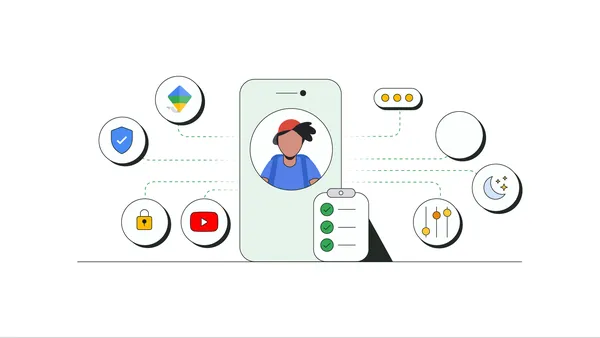
As AI becomes more commercial, it also becomes more pervasive in the lives of the most vulnerable: kids and teens. Google recently highlighted this during Safer Internet Day 2026, focusing on how AI can be used to protect, rather than just exploit.
Safety by Design is a framework that embeds user protection into the core architecture of AI systems from day one, rather than treating it as an afterthought. In 2026, it has moved from a nice-to-have to a regulatory requirement across the EU, UK, and several US states.
For tech professionals, building "Safety by Design" into your 2026 AI workflows is not just an ethical choice—it is a regulatory necessity. A recent McKinsey report found that companies with robust AI safety protocols experienced 34% fewer compliance incidents and 28% higher customer trust scores compared to their peers. As we automate customer service or internal processes, ensuring that these systems are gated against harmful content and data leaks is paramount. Google's focus on digital literacy for the AI generation reminds us that as we build these tools, we must also build the guardrails that keep them sustainable.
Why This Trend is Exploding Right Now
Why is Generative AI Advertising the trending topic of 2026?
- Economic Pressure: AI companies are under immense pressure to turn a profit after billions in R&D investment. OpenAI alone reportedly spent over $8 billion in 2025 on compute infrastructure.
- Tech Maturity: The tools are now fast and cheap enough to be deployed at massive scale in real-time advertising. Latency for ad-generation has dropped from minutes to under 2 seconds.
- Consumer Fatigue: The general public is no longer "scared" of AI; they are used to it, which means advertisers must work harder to get noticed.
- Regulatory Clarity: New frameworks from the EU AI Act and US executive orders have given advertisers clearer rules to operate within, reducing legal uncertainty.
Practical Applications for Business Owners
If you are looking to leverage these 2026 trends, here is your roadmap:
- Audit Your Ad Spend: If you have not allocated a budget for "Conversational AI Ads," now is the time to start experimenting. The early adopters on platforms like ChatGPT will likely see the highest ROI before the space becomes crowded. Industry analysts estimate that early movers are seeing 3-5x return compared to traditional search ads.
- Prioritize Human-Centric Creative: Learn from the Super Bowl failures. Use AI to handle the mechanics of your ad production (resizing, basic editing, data analysis) but keep a human creative director at the helm for the message.
- Automate Safety Checks: Use AI-based moderation tools to ensure your brand's automated interactions remain safe and compliant with the 2026 standards set by industry leaders like Google.
- Invest in AI-Specific SEO: Start optimizing your content for AI citation. This means creating authoritative, well-structured content that language models are likely to reference. Focus on "X is..." definitions and clear factual statements that LLMs can extract and quote.
- Monitor Your AI Brand Presence: Use tools to track how your brand appears in AI-generated responses across ChatGPT, Perplexity, and Google AI Overviews. Your brand reputation now extends beyond search results into AI conversations.
The Verdict: Where Are We Headed?
By the end of 2026, the distinction between an "AI company" and a "software company" will vanish. Everything will be AI-powered, but only the companies that prioritize user experience and ethical safety over raw technical output will thrive.
We are moving toward a "Transparent AI" world. Users will know when they are being advertised to, and they will expect that AI to be safer and smarter than the legacy internet. The era of "free, ad-free AI" is ending, and the era of the "AI-Integrated Economy" has officially begun.
Key Takeaways
- AI advertising has entered its commercialization era. The 2026 Super Bowl proved that generative AI ads without human storytelling fail—only 3 out of 15 AI-themed ads scored positively with audiences.
- ChatGPT ads represent a paradigm shift. AI-specific SEO is now as critical as traditional SEO. Businesses must optimize for "sponsored citations" inside conversational AI platforms, not just Google rankings.
- Safety is now a business differentiator. Companies with robust AI safety protocols see 34% fewer compliance issues and 28% higher trust scores. "Safety by Design" is a regulatory requirement, not optional.
- Early movers in conversational AI ads see 3-5x ROI compared to traditional search ads—but the window of opportunity is closing as platforms mature and competition increases.
- The human element remains irreplaceable. Use AI for mechanics and scale; keep humans in charge of messaging, creativity, and ethical oversight.
Stay automated, stay safe, and most importantly, stay human.
Related Videos
9 AI Skills You MUST Have to Become Rich in 2026
Channel: Dan Martell
State of AI in 2026: LLMs, Coding, Scaling Laws, China, Agents, GPUs, AGI | Lex Fridman Podcast #490
Channel: Lex Fridman