The 2026 Tech Pivot: From Multi-Million Dollar Infrastructure Savings to the Rise of Autonomous AI Shopping

By Abo-Elmakarem Shohoud | Ailigent
As we navigate the final quarter of 2026, the technological landscape is undergoing a seismic shift. The promise of AI is no longer a distant horizon; it is the current engine driving enterprise efficiency, security challenges, and a total reimagining of consumer behavior. This week, three major stories—ranging from massive infrastructure cost-cutting at Topgolf to a high-stakes security breach at OpenAI and the birth of autonomous shopping at Shopify—highlight the volatile yet rewarding nature of our current era.
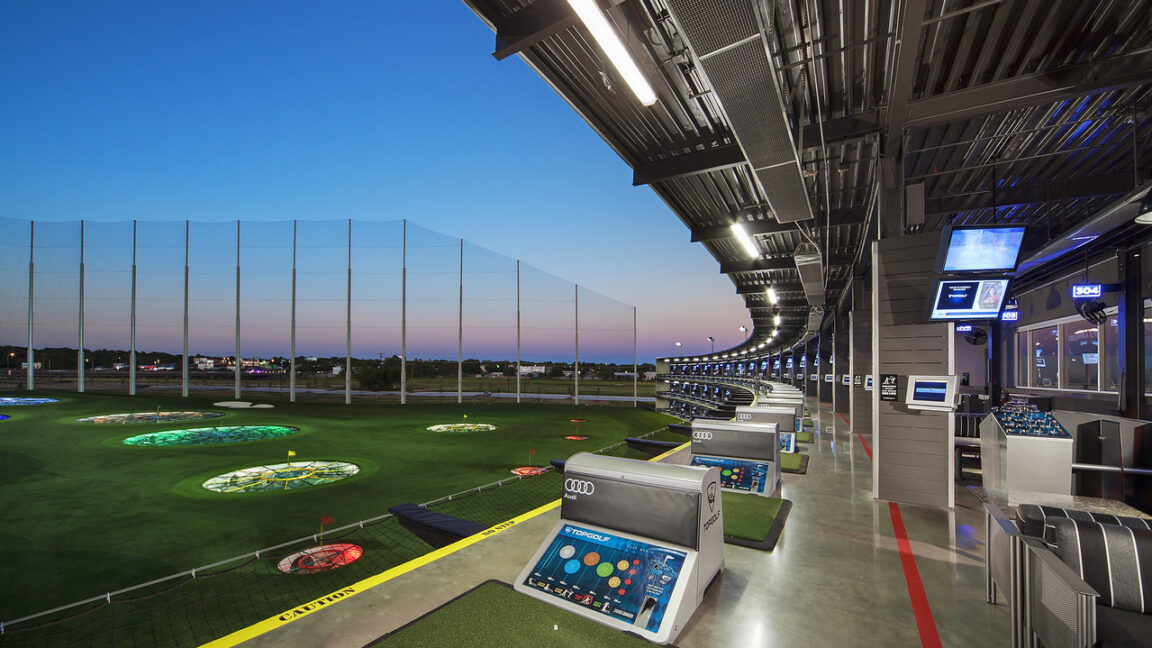 Topgolf saved over $11.3 million after leaving VMware
Source: Ars Technica AI
Topgolf saved over $11.3 million after leaving VMware
Source: Ars Technica AI
At Ailigent, we have consistently advocated for the strategic decoupling of legacy systems in favor of agile, AI-ready architectures. The news today confirms that the "wait and see" approach of 2024 and 2025 has become a liability in 2026. Businesses that are not actively optimizing their stacks and securing their intellectual property are falling behind at an exponential rate.
The $11.3 Million Divorce: Topgolf’s Exit from VMware
In one of the most significant infrastructure pivots of 2026, Topgolf has reported a staggering $11.3 million in savings after migrating away from VMware. For years, the relationship between Topgolf and VMware "ran deep," with the sports entertainment giant relying heavily on traditional virtualization for its global operations. However, the shifting economic tides and the need for more flexible, cost-effective cloud-native solutions led to this massive transition.
Virtualization is the process of creating a software-based representation of something, such as applications, servers, storage, and networks, to reduce IT expenses while boosting efficiency. While VMware was once the gold standard, the acquisition by Broadcom and subsequent pricing model changes have forced many enterprises to reconsider their loyalty. Topgolf’s successful migration serves as a blueprint for other large-scale enterprises looking to reclaim their IT budgets.
This $11.3 million saving isn't just about cutting costs; it’s about reallocating capital toward AI innovation. In 2026, every dollar saved on legacy maintenance is a dollar that can be invested in predictive analytics and customer experience automation. As Abo-Elmakarem Shohoud often emphasizes, technical debt is the greatest silent killer of innovation in the modern enterprise.
Security in the Age of Artificial Intelligence: The OpenAI Breach
While infrastructure optimization is saving millions, the value of the data being protected has never been higher. This was underscored by the recent arrest of Abdulrahman Alfozan, a 35-year-old software engineer at OpenAI. Alfozan is alleged to have planted a "sophisticated recording device" in an OpenAI conference room to intercept sensitive oral communications.
This incident is a sobering reminder that the greatest threat to AI development often comes from within. As OpenAI leads the charge in frontier model development, the stakes for corporate espionage have reached an all-time high. The charge against Alfozan—using or endeavoring to use a device to intercept oral communications—highlights a critical vulnerability in even the most tech-forward organizations: physical security and internal trust.
For business owners in 2026, this news serves as a mandate to review internal security protocols. As we integrate more AI into our workflows, the "human in the loop" remains both our strongest asset and our most significant risk. Security in 2026 must be holistic, covering not just cyber defenses but also the physical and social engineering vectors that bad actors exploit.
 OpenAI employee arrested for allegedly planting a bug in a conference room
Source: The Verge AI
OpenAI employee arrested for allegedly planting a bug in a conference room
Source: The Verge AI
Agentic Commerce: Shopify Opens the Gates to AI Agents
On the consumer side of the spectrum, Shopify is making a move that could fundamentally change how we buy and sell. The platform recently announced it is opening its catalog of over one billion listings to AI agents. These agents can now browse, select, and even purchase products on behalf of human users.
Agentic AI is a paradigm where AI systems are empowered to take autonomous actions on behalf of users, moving beyond simple chat interfaces to transactional execution. This means that in late 2026, your personal AI assistant won't just suggest a new pair of running shoes; it will find the best price across Shopify’s massive ecosystem, verify the shipping times, and complete the purchase using your pre-configured preferences.
Comparison: Traditional E-commerce vs. Agentic Commerce (2026)
| Feature | Traditional E-commerce (Pre-2026) | Agentic Commerce (Current 2026) |
|---|---|---|
| Search Method | Manual keyword search & filters | Natural language intent & autonomous browsing |
| Decision Making | Human evaluates 10+ tabs | AI agent evaluates 1,000+ listings instantly |
| Transaction | Manual checkout & form filling | Autonomous checkout via API/Agent protocols |
| Personalization | Based on browser cookies | Based on deep user preference modeling |
| Efficiency | High time investment | Near-zero time investment for the user |
Shopify’s move signals the beginning of the "Agentic Economy." For merchants, this means SEO is no longer just about appealing to human eyes; it is about making data machine-readable so that AI agents can easily parse and select your products. At Ailigent, we are already helping clients optimize their digital storefronts for this new reality.
Business Impact and the Path Forward
The convergence of these three stories paints a clear picture of the business landscape on October 14, 2026. Efficiency is being found in the rejection of legacy monopolies (Topgolf), security is being tested by the immense value of AI secrets (OpenAI), and commerce is becoming a machine-to-machine interaction (Shopify).
For the mid-sized business owner, the takeaway is clear: you cannot afford to be static. If a giant like Topgolf can move away from a deeply embedded partner like VMware to save $11 million, your business can likely find significant efficiencies by auditing your current tech stack. Similarly, as Shopify opens its doors to AI agents, your marketing strategy must evolve to capture "agentic traffic."
As we continue to push the boundaries of what is possible with automation, the role of leadership is to balance this rapid innovation with rigorous security and strategic foresight. The year 2026 is proving to be the year where the theoretical benefits of AI finally manifest as tangible, bottom-line results.
Key Takeaways
- Audit Legacy Contracts: Follow Topgolf’s lead and evaluate whether your current infrastructure providers (like VMware) are still providing value or if they have become a financial burden. Moving to cloud-native or open-source alternatives can save millions.
- Fortify Internal Security: The OpenAI incident proves that even the most advanced companies are vulnerable to internal threats. Implement zero-trust architectures and rigorous physical security protocols for sensitive areas.
- Prepare for Agentic Commerce: If you sell products online, ensure your product data is structured for AI agents. The shift from human-led search to agent-led purchasing is the biggest retail trend of 2026.
- Invest in AI Literacy: Whether it’s understanding how to manage AI agents or how to secure your models, the "AI IQ" of your workforce is your most valuable currency.
Bottom Line
The events of this week demonstrate that 2026 is a year of bold transitions. Whether it is saving $11.3 million by modernizing infrastructure or preparing for a world where AI agents do our shopping, the common thread is the need for agility. At Ailigent, we remain committed to guiding businesses through these complex shifts, ensuring that you aren't just surviving the AI revolution, but leading it.
By Abo-Elmakarem Shohoud | Ailigent