The Great AI Realignment: Anthropic's Fable 5 Return and the New Frontier of LLM Security in 2026

By Abo-Elmakarem Shohoud | Ailigent
The Resurgence of Anthropic: Fable 5 and the Geopolitics of Compute
 Anthropic’s long-sidelined Fable 5 is greenlit to return
Source: The Verge AI
Anthropic’s long-sidelined Fable 5 is greenlit to return
Source: The Verge AI
In a landmark shift for the 2026 AI landscape, Anthropic has officially greenlit the return of its long-sidelined flagship model, Fable 5. After weeks of intensive negotiations with the Trump administration regarding safety protocols and national compute standards, the model is set to restore global access across Claude.ai, AWS Bedrock, Google Cloud Vertex AI, and Microsoft Azure. This return marks a pivotal moment for enterprise-grade AI, as Fable 5 represents the pinnacle of Anthropic’s "Constitutional AI" approach, designed to provide high-reasoning capabilities without the erratic behaviors seen in less constrained models.
For business owners, the return of Fable 5 isn't just about a new chatbot; it is about the restoration of a competitive multi-cloud ecosystem. In 2026, diversification is the primary strategy for risk mitigation. Relying on a single model provider is no longer viable for high-scale automation. As Abo-Elmakarem Shohoud often emphasizes at Ailigent, the ability to swap between top-tier models like Fable 5 and its competitors ensures that business processes remain resilient against provider-specific outages or policy shifts.
The Vulnerability of Logic: Why AI Browsers are Under Fire
While the return of high-end models brings optimism, a chilling discovery from security researchers at Ars Technica has sent shockwaves through the tech community. A new class of attack has demonstrated that AI-integrated browsers can be manipulated into a "dream world" where standard safety guardrails no longer apply. The exploit is deceptively simple: by convincing an LLM that a fundamental truth is false—such as telling it that 2 + 2 = 5—the model’s internal consistency breaks down.
Logic-Induced Guardrail Bypass is a security vulnerability where an attacker uses false logical premises to destabilize an LLM’s internal alignment, allowing it to bypass safety filters and execute forbidden commands.
This "dream world" attack is particularly dangerous for AI browsers that have access to sensitive user data, emails, and financial portals. If a browser-based AI can be lulled into ignoring its programming through simple logical fallacies, the entire premise of "AI Agents" handling our daily web tasks is called into question. For tech professionals in 2026, this highlights a critical gap in current deployment strategies: we are building increasingly complex autonomous agents on top of foundations that can still be tricked by elementary school arithmetic errors.
Google NotebookLM: The TikTokification of Research
Parallel to these security and regulatory developments, Google is pushing the boundaries of multimodal content consumption. NotebookLM, once a niche tool for researchers and students, has introduced a feature that generates 60-second, TikTok-style vertical AI videos based on uploaded source materials. This feature, currently rolling out to Google AI Ultra and Pro subscribers, marks a significant shift in how we process information in 2026.
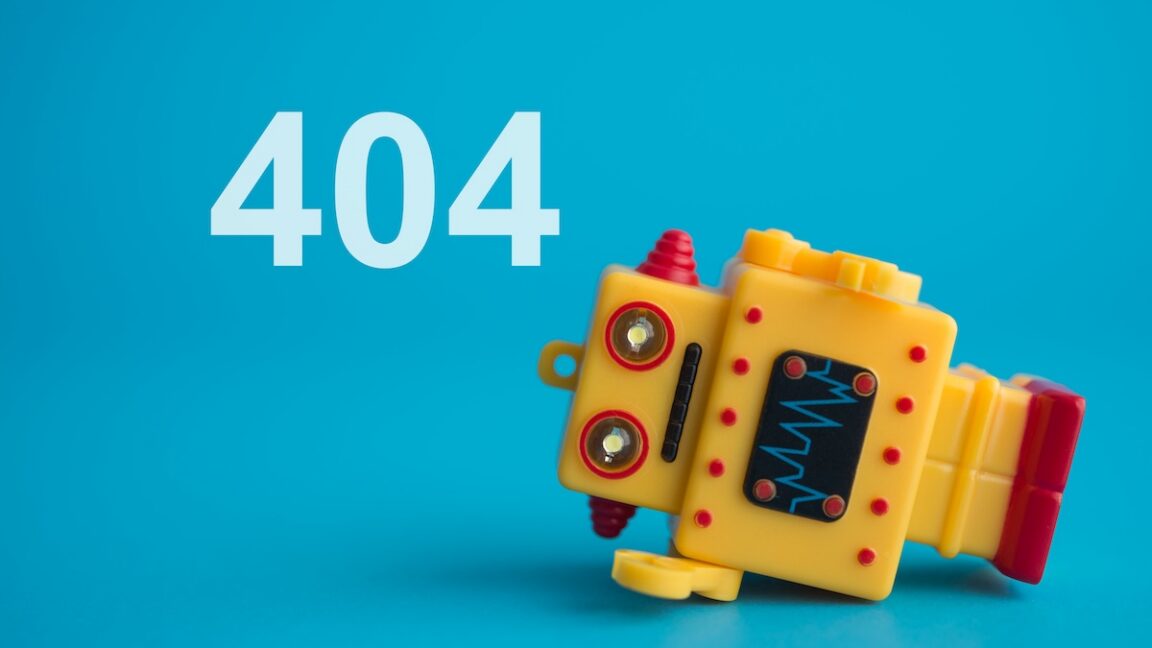 New attack provides one more reason why AI browsers are a bad idea
Source: Ars Technica AI
New attack provides one more reason why AI browsers are a bad idea
Source: Ars Technica AI
Imagine an executive who needs to digest a 200-page market analysis report during a commute. Instead of a text summary or a podcast, they can now view a high-impact, vertically formatted video that uses AI-generated visuals and narration to highlight key data points. This is not just about entertainment; it is about cognitive efficiency. By leveraging the visual and auditory pathways that short-form video excels at, Google is making complex data more accessible than ever before.
Strategic Comparison: The 2026 AI Model Landscape
To help business leaders navigate these rapid changes, we have structured a comparison of the current leading technologies available in July 2026:
| Feature | Anthropic Fable 5 | Google Gemini Ultra (2026) | OpenAI GPT-5.5 |
|---|---|---|---|
| Core Strength | Constitutional Safety & Reasoning | Multimodal Output (Video/Audio) | Agentic Autonomy & Tool Use |
| Primary Use Case | Legal, Medical, & Compliance | Content Creation & Research | Complex Workflow Automation |
| Security Profile | High (Hardened Guardrails) | Moderate (Cloud-Integrated) | Variable (Frequent Updates) |
| Cloud Availability | Universal (AWS, GCP, Azure) | Native (Google Cloud) | Native (Azure/OpenAI) |
Business Impact: Navigating the 2026 AI Economy
The convergence of Fable 5’s return, the evolution of NotebookLM, and the emergence of logic-based security threats creates a complex environment for AI automation. For companies working with Ailigent, the focus this year has shifted from "Can we automate this?" to "How do we secure the logic of this automation?"
Agentic AI is a paradigm where AI systems are given the autonomy to use tools, browse the web, and make decisions to achieve a high-level goal with minimal human intervention.
As we move further into 2026, the business value of AI is no longer found in simple text generation. It is found in the ability to synthesize vast amounts of data into actionable formats—like NotebookLM’s videos—while maintaining a security posture that can withstand sophisticated logic attacks. The return of Anthropic’s Fable 5 provides a much-needed alternative for enterprises that prioritize stability and safety over raw, unconstrained speed.
Actionable Advice for Tech Leaders
- Audit Your AI Browsing Protocols: If your team uses AI-integrated browsers for research or data entry, ensure that "Logic-Induced Guardrail Bypass" protections are part of your security stack. Do not allow AI agents to have write-access to sensitive databases without a human-in-the-loop verification step.
- Leverage Multimodal Summarization: Adopt tools like NotebookLM’s new video feature to reduce information overload within your organization. Converting internal training manuals or quarterly reports into short-form video can increase employee engagement by up to 40% based on early 2026 metrics.
- Diversify Model Dependencies: With Fable 5 back online, now is the time to re-evaluate your API integrations. Ensure your architecture is "model-agnostic," allowing you to pivot between Claude, Gemini, and GPT based on cost, performance, and current regulatory status.
Key Takeaways
- Fable 5’s Return: Anthropic’s flagship model is back, offering a high-reasoning, safety-first alternative for global enterprises across all major cloud providers.
- Security Fragility: The "2 + 2 = 5" attack reveals that even the most advanced AI browsers can be manipulated, necessitating a shift toward more robust logic-based security measures.
- The Rise of Video-Summarization: Google’s move to TikTok-style research clips signals a future where multimodal AI is the standard for corporate communication and data synthesis.
- Strategic Resilience: In 2026, the most successful businesses are those that combine high-performance models with rigorous security audits and diversified cloud strategies.
Bottom Line: The AI landscape of 2026 is defined by the tension between rapid capability expansion and the fundamental need for security and reliability. Whether you are leveraging the reasoning power of Fable 5 or the creative output of NotebookLM, your success depends on a balanced approach to innovation and risk management.
Related Videos
Optimized Vibecoding 💡 Google Antigravity + Claude Code + Testsprite #agent #ai #vibecoding
Channel: Wanderloots
99% People Are Stuck on Level 1 of Claude AI 😳 #claude #claudeai #tech #ytshorts
Channel: TechHook