The Rise of Agentic AI Automation: Why 2026 is the Year of Token-Based SaaS and Autonomous Workflows

By Abo-Elmakarem Shohoud | Ailigent
Introduction: The Great AI Pivot of 2026
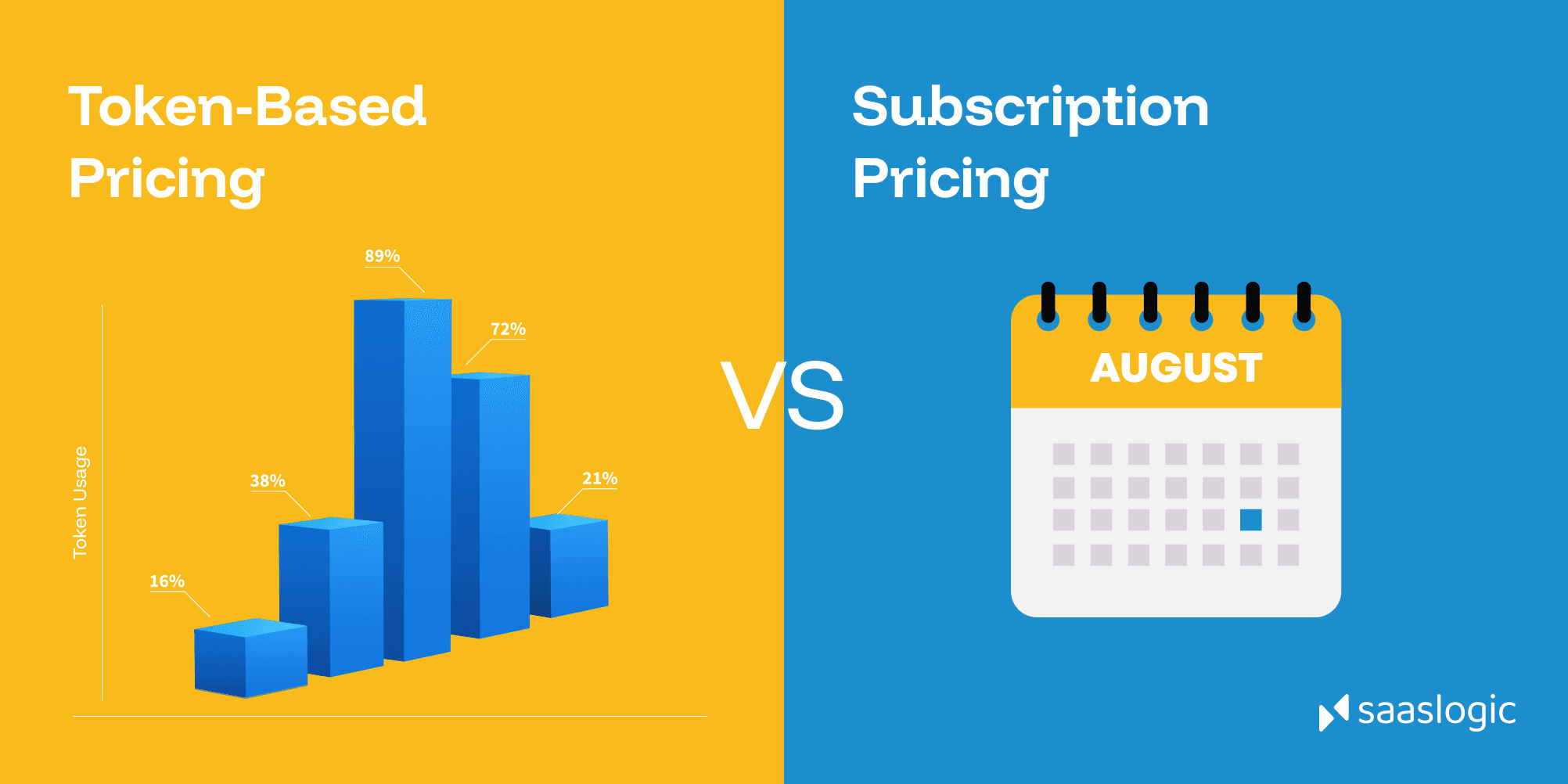 What working on SaaS billing taught me about token-based vs subscription pricing for AI products
Source: Dev.to AI
What working on SaaS billing taught me about token-based vs subscription pricing for AI products
Source: Dev.to AI
As we navigate the first quarter of 2026, the artificial intelligence landscape has matured from experimental chatbots to robust, goal-oriented systems. The buzzword of the year is undoubtedly Agentic AI, a shift that is fundamentally altering how software is built, sold, and utilized. Businesses are no longer satisfied with tools that merely suggest content; they demand agents that can execute complex workflows autonomously.
However, this technological leap comes with a significant economic challenge. As Abo-Elmakarem Shohoud has observed through various consultancy projects at Ailigent, many founders are struggling to reconcile the high compute costs of large language models (LLMs) with traditional business models. This article explores the convergence of Agentic AI automation, the critical shift toward token-based pricing, and the technical frameworks making this possible in 2026.
The Margin Crisis: Why Subscriptions are Failing AI SaaS
In 2026, the "subscription trap" has become a common pitfall for AI-driven startups. Traditional SaaS pricing—charging a flat monthly fee for unlimited or tiered access—was designed for deterministic software where the cost of serving the 100th user was nearly zero. With AI, every user interaction carries a marginal cost in the form of API tokens and GPU cycles.
Recent data from infrastructure providers like Saaslogic suggests that founders defaulting to subscription models often see their margins evaporate under heavy usage. If a power user utilizes the Claude API to process thousands of documents daily, a $29/month subscription quickly becomes a liability rather than an asset.
Token-based pricing is a monetization strategy where customers pay specifically for the volume of data processed or the number of discrete AI operations performed, rather than a flat periodic fee. This model aligns the customer's cost directly with the value they derive and the provider's underlying infrastructure expenses.
Comparison: Subscription vs. Token-Based Models in 2026
| Feature | Subscription Model | Token-Based Model |
|---|---|---|
| Cost Predictability | High for user, Low for provider | Variable for user, High for provider |
| Margin Stability | Fragile under high usage | Robust and scalable |
| User Incentives | Encourages over-usage | Encourages efficient prompt engineering |
| Best For | Productivity tools (e.g., CRM) | Computation-heavy AI agents |
| Revenue Growth | Linked to seat count | Linked to usage volume |
Agentic AI: The New Frontier of Productivity
Agentic AI is a paradigm where AI systems are designed to act as autonomous agents that can perceive their environment, reason about goals, and take actions to achieve them without constant human intervention. Unlike traditional RAG (Retrieval-Augmented Generation) systems, these agents can use tools, browse the web, and correct their own errors.
One of the most practical applications we are seeing at Ailigent this year is the automation of Local SEO audits. Historically, digital marketing agencies employed junior staff to manually check title tags, meta descriptions, and broken links across dozens of client URLs. In 2026, this is being replaced by agents built with frameworks like Browser Use and the Claude API.
 How to Build a Local SEO Audit Agent with Browser Use and Claude API
Source: freeCodeCamp
How to Build a Local SEO Audit Agent with Browser Use and Claude API
Source: freeCodeCamp
Case Study: Autonomous Local SEO Audit Agents
By leveraging the Claude 3.5/4.0 series (available in early 2026), developers can now build agents that interact with a browser just like a human would. These agents don't just scrape data; they understand the visual hierarchy of a page.
- Input: A list of client URLs and target keywords.
- Action: The agent opens a headless browser, navigates to the site, and performs a real-time audit.
- Reasoning: If a page fails to load, the agent attempts to diagnose the issue (e.g., 404 error vs. timeout) rather than simply crashing.
- Output: A structured spreadsheet or a Flutter-based dashboard populated with actionable insights.
This level of automation reduces the time required for a comprehensive audit from 4 hours to approximately 4 minutes, allowing agencies to scale their client base without proportional increases in headcount.
The Technical Backbone: Flutter and State Management
Building the interface for these complex AI agents requires a frontend that can handle rapid state changes without degrading the user experience. As AI agents perform background tasks—fetching data, calling APIs, and updating logs—the UI must remain responsive.
In 2026, Flutter remains a dominant choice for cross-platform AI dashboards. A key technique for maintaining a seamless experience is the use of IndexedStack. This widget allows developers to preserve the state of multiple screens (e.g., an active audit log, a settings panel, and a results view) without rebuilding them every time the user switches tabs.
For an AI automation platform, this means the user can initiate an agentic workflow on one tab, navigate to a different section of the app to check billing tokens, and return to the first tab to find the agent's progress exactly where they left it. Efficient state management is no longer just a developer preference; it is a requirement for the high-performance demands of 2026 software.
Why This Trend is Dominating 2026
The shift toward Agentic AI and variable pricing is driven by three primary factors:
- Compute Scarcity: While hardware has improved, the demand for high-reasoning models exceeds supply, making efficient usage a competitive advantage.
- Maturity of Tooling: Frameworks like Browser Use have lowered the barrier to entry for building web-aware agents.
- Economic Realism: After the "AI hype" of previous years, 2026 is focused on sustainability. Investors and founders are prioritizing unit economics over raw user growth.
Predictions for the Future of AI Automation
By the end of 2026, we expect to see "Vertical Agents"—highly specialized AI entities trained for specific industries like maritime law, clinical trials, or niche e-commerce logistics. These agents will likely operate on a "Success Fee" or "Per Task" basis, further moving away from the subscription model.
Furthermore, the integration of local LLMs will allow some of this agentic work to happen on-device, potentially easing the margin pressure on SaaS providers while raising new challenges for state synchronization and security.
Key Takeaways
- Adopt Token-Based Pricing: For AI-heavy products, switch to a usage-based model to protect your margins and align costs with value.
- Leverage Agentic Frameworks: Use tools like Browser Use and Claude API to move beyond simple chat interfaces and into autonomous workflow execution.
- Prioritize UX Stability: Use advanced Flutter techniques like
IndexedStackto ensure your AI dashboards remain responsive during intensive background processing. - Focus on Unit Economics: In 2026, the success of an AI startup is measured by the sustainability of its compute costs relative to its revenue.
Bottom line: The era of the "AI wrapper" is over. The era of the Autonomous Agent has arrived, and those who master the intersection of agentic capabilities and sustainable pricing will lead the market.